Get Full Government Meeting Transcripts, Videos, & Alerts Forever!
Get email alerts on the Wrongful Conviction Compensation topic
No spam. Unsubscribe anytime.
Appropriations committee approves $1.6 million resolution to compensate Cedric Moore for wrongful conviction
Summary
The committee approved House Resolution 130 to compensate Cedric Moore $1,600,000 for a wrongful conviction that resulted in about 23 years of incarceration; the committee discussed case facts, DNA-based exoneration and how the award amount was calculated.
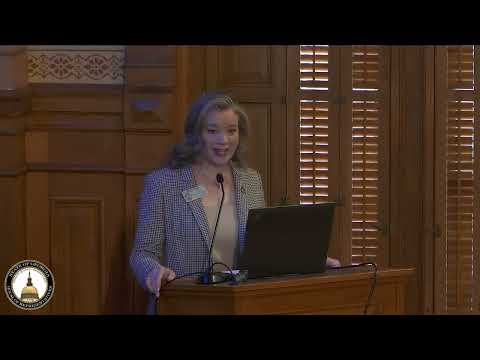
The House Appropriations Committee voted to approve House Resolution 130, which recommends compensating Cedric Moore $1,600,000 for wrongful conviction and incarceration, after Representative Crawford presented details about the case.
Crawford told the committee that Moore was wrongfully convicted for a sexual assault and served about 23 years in prison for a crime that DNA evidence and additional review later showed he did not commit. "What I learned was that Mr. Moore was wrongfully accused of the [sexual] assault. And that he spent 23 years in jail for a crime that he never committed," Crawford said when presenting the resolution.
Crawford described the facts presented in court: an initial co-defendant later identified Moore at trial, but the victim did not identify Moore and later testing of preserved DNA evidence excluded him. Committee members asked whether Moore had other arrests; Crawford said he was unaware of prior arrests and that Moore was extradited to Georgia after being located out of state.
Members compared the request to a prior compensation case for a different defendant in the same incident, Carrie Robinson, who previously received reimbursement after exoneration. Crawford said Moore’s award was calculated similarly: approximately $75,000 for each year of lost productive time over roughly 23 years, less certain fees and costs, producing the $1.6 million figure shown in the draft.
Representative Reeves cited federal case law that requires disclosure of exculpatory evidence, noting Brady and Giglio doctrines as part of the legal background that led to the verdicts being overturned. Committee members urged the Legislature to consider broader statutory reforms for wrongful-conviction review and compensation.
A motion to report the resolution favorably passed by voice vote; the transcript records multiple members making motions and seconds and concludes with "All those in favor, say aye" followed by "Any opposed? No." The transcript does not record a roll-call tally.
The committee’s discussion emphasized the difficulty of restoring lost years and the need for consistent processes for future exoneration compensation.