Get Full Government Meeting Transcripts, Videos, & Alerts Forever!
Get email alerts on the Professional Licensing topic
No spam. Unsubscribe anytime.
Appropriations committee approves HB 579 to streamline professional licensing
Summary
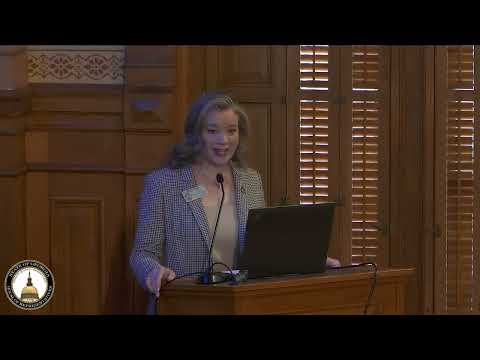
The full House Appropriations Committee approved a committee substitute to House Bill 579 on a voice vote after Representative Reeves presented the measure as the product of a Blue Ribbon Professional Licensing Committee.
The full House Appropriations Committee approved a committee substitute to House Bill 579 on a voice vote after Representative Reeves presented the measure as the product of a Blue Ribbon Professional Licensing Committee.
The bill, Reeves said, implements committee recommendations to improve customer service and modernize licensing. "The people of Georgia deserve excellent customer service and 21st century professional licensing," Reeves said, summarizing the package.
Reeves told the committee the committee reviewed more than 12 hours of testimony from roughly 30 members of the public, input from eight state agencies and seven licensing boards, and data showing more than 550,000 active licenses in the state. He said the professional licensing division currently manages 42 boards responsible for 186 professions and had 95 employees in 2024.
The committee substitute would, among other changes: - Allow applicants greater flexibility to take licensing exams concurrently with certain application steps. - Add application-approval duties to the division director and the secretary of state’s office. - Permit the division director to grant licenses, renewals or reinstatements in some circumstances on behalf of licensing boards. - Codify the secretary of state’s authority to set expiration, renewal and penalty dates and a minimum late period. - Authorize the governor to remove board members for inability or neglect to perform duties, incompetence or dishonest conduct. - Convert certain licenses (auctioneers, geologists, hearing-aid dealers/dispensers and some counselor-related registrations) to registration status rather than full licensure.
Reeves said the bill also responds to a Georgia Supreme Court decision, identified in committee testimony as Raffensperger v. Jackson, by making necessary code changes.
The measure sets an effective date of July 1, 2026, to allow time for implementation. Committee members praised the bill as a multi-stakeholder effort to reduce burdens both on applicants and on legislators handling constituent service requests.
A motion to approve the committee substitute carried by voice vote; the record in the transcript does not identify a mover, a seconder or a roll-call tally.
The committee substitute returned with a legislative council number LC550559S (committee substitute). Representative Reeves asked the committee if members wished to pursue further questions or elaboration before the vote; none was required.
If enacted, the changes would affect a broad array of occupations regulated by state boards and the professional licensing division. Implementation details and any board-level rule changes would be developed after enactment.