Get Full Government Meeting Transcripts, Videos, & Alerts Forever!
Get email alerts on the Humanitarian Operations Updates topic
No spam. Unsubscribe anytime.
U.N. reports large-scale humanitarian needs in Gaza, West Bank, Syria and eastern DRC; screenings and relief distributions ongoing
Summary
The U.N. Office for the Coordination of Humanitarian Affairs and partners have screened children for malnutrition in Gaza, distributed relief items across Gaza governorates, documented displacement in the West Bank and reported deadly attacks and mass displacement in eastern DRC and South Kivu.
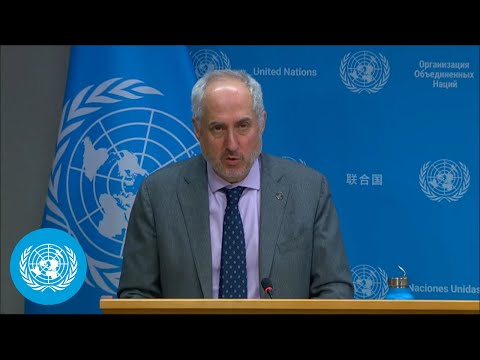
Steph, United Nations spokesperson, gave a summary of recent humanitarian operations and reported needs across several regions, saying partners have scaled up screenings and distributions while operations remain constrained by security and funding conditions.
In Gaza, OCHA and partners have screened more than 100,000 children under age 5 for malnutrition and enrolled those needing treatment; they are also distributing nutrient supplements to infants and young children. Steph said more than half a million people across Gaza’s five governorates have received blankets, mattresses, floor mats, clothing and tarpaulin for rain protection.
In the West Bank, OCHA reported ongoing Israeli military operations entering a sixth week in some areas. Tens of thousands remain displaced in Jenin and Tulkarm; a joint assessment mission to those areas on Feb. 25–26 found many families displaced multiple times and unable to meet basic needs. The spokesperson said displaced people have reduced food consumption and that children have lost more than a month of schooling and face high levels of anxiety and distress.
Steph also cited a rise in settler-related violence, saying documented incidents rose to 330 in 2024 compared with 50 in 2020.
In Syria, the spokesperson said 31 trucks carrying hygiene and health supplies from UNICEF crossed from Türkiye through the Bab al-Hawa crossing, bringing the total number of trucks into Syria since the start of the year to 506. U.N. partners removed more than 8,000 cubic meters of debris in Idlib in the past two weeks and generated over 570 income opportunities through cash-for-work programs, Steph said. OCHA completed the first U.N. cross-border mission to Maarat al-Numan in Idlib and has carried out 78 cross-border missions so far this year, bringing the overall total to 781 since the 2023 earthquake, she said.
Turning to the Democratic Republic of the Congo, Jean-Pierre Lacroix, Under-Secretary-General for Peace Operations, visited Beni in North Kivu to assess the security situation and urged swift implementation of resolution 2773, Steph said. Humanitarian partners reported deadly escalations by the Allied Democratic Forces (ADF), with at least 23 civilians killed in Ituri province earlier in the week and 17 civilians killed in Beni territory on Feb. 26, according to local authorities. Steph said dozens more people were kidnapped in February raids and that more than 125,000 people have been displaced since early February around South Kivu, many sheltering in schools, churches and sports fields.
UNHCR reported that roughly 60,000 Congolese have fled into Burundi in the previous two weeks; U.N. partners are providing tents, food, water and relief items including sleeping materials, buckets and soap.
In South Sudan and other countries, U.N. peacekeeping and regional bodies warned that renewed clashes and tensions risk undermining fragile peace gains during a sensitive transitional period, Steph said.
Steph also highlighted progress at the biodiversity COP16 in Rome, where parties agreed on plans to mobilize private finance and other measures under the Kunming-Montreal global biodiversity framework. The briefing noted an estimated need to mobilize at least $200 billion a year by 2030 for biodiversity protection, language used in the briefing to describe global financing goals.
The spokesperson reiterated that humanitarian operations continue to scale up support “as logistical security and funding conditions permit,” and that partners are conducting assessment missions to better inform responses.