Get Full Government Meeting Transcripts, Videos, & Alerts Forever!
Get email alerts on the United Nations Funding Cuts topic
No spam. Unsubscribe anytime.
U.N. says recent U.S. funding cuts have terminated dozens of projects; secretary-general urges reversal
Summary
U.N. spokesperson says multiple agencies have received termination letters after recent funding cuts by the United States, affecting programs from anti-narcotics work to humanitarian projects in DRC and Haiti; U.N. seeks clarification and alternative funding while urging the cuts be reversed.
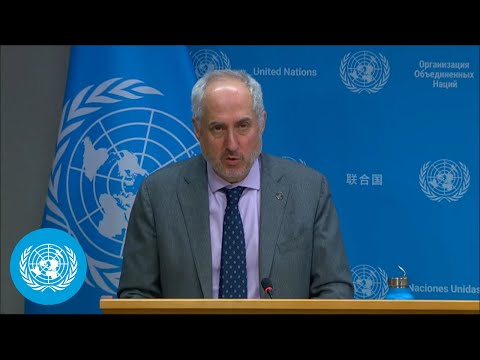
Steph, United Nations spokesperson, told reporters that in the past 48 hours U.N. agencies received information about “severe cuts in funding by the United States,” and that the secretary-general has expressed “deep concern” about the impact on vulnerable people worldwide.
The spokesperson said some agencies have already received formal termination letters. “For example… our colleagues at UN drugs and crime program have had about 50 projects terminated,” Steph said, adding that the office in Mexico that deals with fentanyl-related flows may have to close. IOM’s programs in the Democratic Republic of the Congo have “basically shut down,” and IOM programs in Haiti are at risk, she said. The Food and Agriculture Organization received 27 termination letters, Steph said.
Steph said the situation is unfolding in a “chaotic” way and that the U.N. does not yet have a single, consolidated ballpark figure for total funding lost across the system. “We don’t have a ballpark figure because this has been done in a bit of a, you know, frankly, in a chaotic, in a chaotic way,” she said.
The secretary-general has been in contact with heads of major humanitarian and development agencies to get a clearer picture of impacts and to express solidarity, Steph said. Agency heads are also attempting to reach their counterparts in the U.S. government; Steph said many agencies have not always been successful in making contact.
When asked who sent the termination letters, Steph said most of them, she believes, “came from the state department from Peter Morocco.” The spokesperson said the secretary-general hopes the decisions can be reversed and that U.N. agencies “stand ready to provide the necessary information and justification for their projects.”
Asked about contingency planning if cuts are not reversed, Steph said the U.N. is seeking to diversify funding sources and to increase efficiency across the system. “We are also looking at the private sector,” she said. Tom Fletcher, the humanitarian coordinator who chairs the interagency committee, has emphasized the need to save money, reduce overlap and eliminate inefficiencies, she added.
Steph declined to characterize the political relationship between the secretary-general and the U.S. president beyond saying the U.S. is a founding and critical member of the organization and noting conversations have been requested. “Has the secretary-general himself ever requested a conversation with President Donald Trump? Yes. We’ve made that very clear for quite some time now. You have already done that, but there’s no response yet,” she said.
The spokesperson said the immediate priority for the U.N. is sustaining life-saving aid to people in urgent need while agency leaders work to clarify the scale of cutbacks and pursue contacts and alternatives.
The briefing included follow-up questions from journalists representing the United Nations Correspondents Association and other news outlets; Steph answered that the cuts are being felt most acutely by small local implementing partners and vulnerable beneficiaries when funding is withdrawn.