Get Full Government Meeting Transcripts, Videos, & Alerts Forever!
Get email alerts on the Elder Financial Fraud topic
No spam. Unsubscribe anytime.
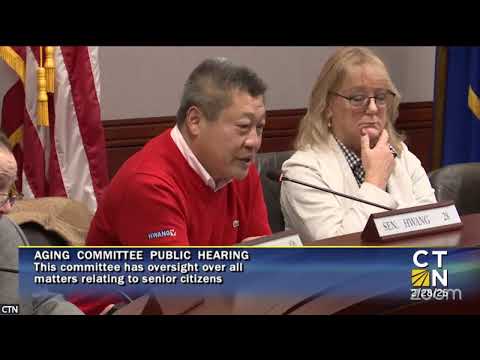
Aging Committee considers elder justice unit and task force to tackle rising senior financial fraud
Summary
Multiple witnesses urged the Aging Committee to create an elder justice unit and multidisciplinary task force to coordinate prevention, prosecution and restitution for elder financial fraud, while cautioning that new units require funding and federal cooperation for cross‑border crimes.
Advocates, law enforcement partners and community groups told the Aging Committee on Feb. 28 that financial crimes against older adults have become pervasive and that Connecticut should establish a coordinated elder justice response.
The Commission on Women, Children, Seniors, Equity and Opportunity (CWCSEO) recommended centralizing reporting and prevention and supported creating an elder justice unit within the Division of Criminal Justice, while underscoring the need for new resources. Megan Baker, the commission’s AAPI policy analyst, highlighted FBI data showing large national losses and urged funding for prevention and community‑based education.
AARP volunteers and the National Insurance Crime Bureau (NICB) assented: Barbara Monk of AARP’s Fraud Watch Network and Howard Handler of NICB told the committee that elder financial fraud is both widespread and underreported and that crimes often cross state and national borders. NICB suggested two amendments: explicitly include financial crimes in the task force’s remit and permit consultation with nonprofit partners such as NICB.
Multiple witnesses said prosecution and asset recovery are difficult without specialized capacity. The CWCSEO and other witnesses urged a forensic accounting capacity and prosecutorial specialists who can handle complex, often interstate and cryptocurrency‑linked schemes. Michael Werner (CWCSEO) noted prior DOJ grant funding that helped states establish elder justice units but said those federal resources have faded; the commission urged planning for external funding and a legislative task force that includes people with lived experience to guide preventive measures.
Victim advocates, including volunteer leaders who work directly with scam victims, emphasized barriers to reporting: embarrassment, belief that a loss is a private matter, or a sense that law enforcement will not prioritize financial fraud against older adults. Witnesses said persistent public education (fraud hotlines, community presentations) and funds to staff an ombudsman program and investigative units are essential prevention tools.
Why it matters: Witnesses framed elder financial exploitation as not only a personal tragedy but a fiscal problem with systemic effects — drained savings, loss of housing, and greater future reliance on public benefits. Speakers urged that prosecution, prevention and restitution require a coordinated state response, funded positions and interagency collaboration with federal partners.
Key speakers: Megan Baker and Michael Werner (CWCSEO); Barbara Monk (AARP Fraud Watch Network volunteer); Nora Duncan (advocate and fraud‑prevention organizer); Howard Handler (National Insurance Crime Bureau). The committee discussed related bills including SB 13 (financial fraud schemes against seniors) and bills pending in other committees that touch banking, crypto and consumer protections.
What lawmakers asked: Committee members pressed for cost estimates and asked whether special prosecutors or dedicated investigators would be sufficient. NICB and CWCSEO offered to provide more detailed proposals to inform fiscal analysis and implementation plans.