Get Full Government Meeting Transcripts, Videos, & Alerts Forever!
Get email alerts on the Transportation Notice topic
No spam. Unsubscribe anytime.
Bill would require notice and hearings when private developers alter state roads; neighbors point to 'Dewberry Roundabout'
Summary
Representative Evans presented House Bill 76 to require the same public-notice and hearing protections for state road changes funded by private developers as for state-funded projects. Neighbors and civic groups testified that a privately funded roundabout was built without advance community notice and urged the change.
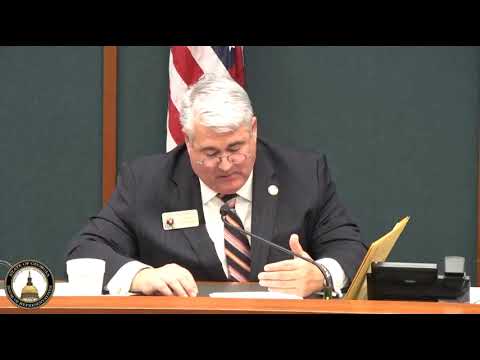
Representative Evans introduced House Bill 76 to require notice and an opportunity for hearings when a private developer funds significant changes to state roads, saying current law requires hearings when GDOT funds projects but can lack the same protections when private parties pay for the work.
"If we are having a significant road change in a neighborhood or near surrounding businesses, we give those parties the courtesy of number one, a heads up and the opportunity to provide input into how that project goes," Representative Evans said, recounting a recent privately funded roundabout project in Atlanta that neighbors learned about only after construction began.
Multiple neighborhood leaders — including Tom Bowler speaking for a local temple, Paul Dimock of the Ansley Park Civic Association and Nabil Hammam of Sherwood Forest — described waking up to bulldozers and learning the project had been approved under a special encroachment permit because the developer owned adjacent land and funded the work.
Speakers said they later used open-records requests to learn project details, and that GDOT and Atlanta Department of Transportation subsequently held after-the-fact meetings and committed to a traffic study. "This project was not on Midtown Alliance’s master plan or any other public document," Paul Dimock told the committee. He and other residents said the principal concern is the secondary traffic impacts on nearby residential streets and intersections.
Deputy and committee members asked whether counties or cities had notification duties in these situations; presenters replied the primary issue was that GDOT’s permitting practice allowed a privately funded encroachment permit without the same statutory hearing requirement that applies to state-funded projects. Representative Evans said GDOT had changed internal rules to hold hearings in some cases but that the bill would place the requirement into statute.
The session was a hearing only; Representative Evans asked for the committee’s eventual favorable consideration and said she might return later to answer additional questions. No committee vote on HB 76 was recorded in the transcript.
Community groups urged statutory change so residents would receive notice and have an opportunity to provide input before work begins, particularly in dense urban corridors where construction can alter traffic flow for years.