Get Full Government Meeting Transcripts, Videos, & Alerts Forever!
Get email alerts on the Military Transportation topic
No spam. Unsubscribe anytime.
Committee backs bill to let GDOT perform work on military bases under intergovernmental agreement
Summary
The committee approved House Bill 224, authorizing a statewide regional intergovernmental support agreement (RIGSA) framework with the Department of Defense so Georgia Department of Transportation can provide road work and related services for military installations such as Fort Stewart and Hunter Army Airfield.
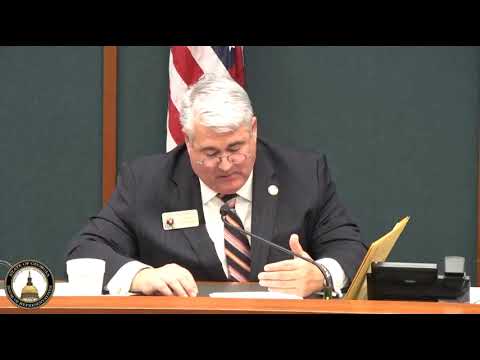
The House Transportation Committee voted to advance House Bill 224 after members heard from the bill’s sponsor, Representative Josh Bonner, and a video appearance by Colonel Mark Austin, garrison commander at Fort Stewart.
The bill would authorize Georgia to enter into a regional intergovernmental support agreement — described in testimony as a RIGSA or similar intergovernmental arrangement — with the Department of Defense. Committee testimony said the agreement would allow the Georgia Department of Transportation to provide engineering, contracting and other road-related services on Army installations when requested, enabling installations to use GDOT’s contracting relationships and subject-matter expertise.
Representative Josh Bonner told the committee the idea originated with installation leaders and that legislation was required to allow the state-level intergovernmental arrangement. "This was brought to me...about a year and a half ago," Bonner said, adding that the proposal evolved through discussions with multiple officials.
Colonel Mark Austin, on Zoom, described the potential scale of need for Fort Stewart and Hunter Army Airfield, saying the installations maintain a three-year real property maintenance plan that included more than 80 individual road-paving projects totaling about $25,000,000. He said the RIGSA in Texas (effective June 2023) and similar agreements in North Carolina and Alabama informed the request and that the arrangement would not reduce costs to the Department of Defense but would provide access to GDOT staff expertise and to contractors that are already prequalified in Georgia.
Committee members asked whether GDOT would act as a contracting intermediary rather than performing all work directly; representatives answered that GDOT would be a partner and that the installations would pay for work but could benefit from state contracting scale and prequalified vendor lists. Representative Bruce Carter described the concept as a way to use "institutional knowledge of the state" to make repairs more efficient; Colonel Austin and Representative Bonner confirmed the arrangement would not be a state-funded subsidy.
The committee approved the bill by voice vote after a motion for "do pass." Testimony recorded that installations would remain responsible for project costs; the proposed agreement is intended to improve timeliness and coordination and to open an additional contracting option for installations.
Votes at a glance: House Bill 224 — Do pass; voice vote; advanced by committee.