Get Full Government Meeting Transcripts, Videos, & Alerts Forever!
Get email alerts on the Right Of Way Abandonment topic
No spam. Unsubscribe anytime.
East Ridge council approves abandonment of portion of Bullringle Road right-of-way over objections
Summary
The East Ridge City Council approved Ordinance 12-15 to abandon a portion of right-of-way in the 3600–3700 blocks of Bullringle Road, despite a failed motion to table and questions from council members about traffic and access. Developer representatives said they plan to convert the space into pedestrian-oriented uses and periodic events.
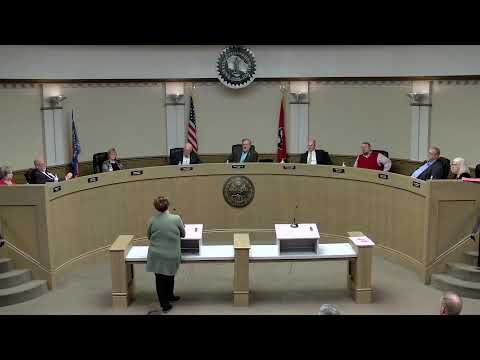
The East Ridge City Council voted 4-1 on Feb. 27 to adopt Ordinance 12-15, abandoning a portion of right-of-way within the 3600 and 3700 blocks of Bullringle Road.
The ordinance will transfer the 30-foot width of the roadway to the adjoining property owners in equal parts (15 feet each) when the right-of-way is formally abandoned, staff said. Council members discussed whether a full abandonment — which would permanently remove the right-of-way — was appropriate for a corridor that residents use regularly.
Council debate included a failed motion to table consideration and an unsuccessful proposal to pursue a temporary closure/permit system instead of abandonment. After the tabling motion failed, the council returned to the original motion to adopt the ordinance. The final roll call was: Vice Mayor Tyler — yes; Council member Cagle — no; Council member Ezell — yes; Council member Witt — yes; Mayor Williams — yes. The ordinance passed on second and final reading.
Brad Shumpert, executive vice president of Urban Story Ventures, told the council the property owner and developers have contacted other adjacent property owners and envision converting the abandoned portion into pedestrian-friendly space and programming. “We do plan to reuse it, much more than just 1 day a month,” Shumpert said, describing plans for planters, lighting, parking reconfiguration, pop-up events and activities intended to draw foot traffic and support retail recruitment.
Council members questioned how frequent the developer would use the closed space and whether surrounding residents and property owners would have to consent to repeated temporary closures. One council member asked whether the proposed use would require property-owner agreement for each closure; staff replied the underlying right-of-way abandonment would transfer ownership and that temporary closures or permits could be handled afterward.
A separate motion to table the ordinance while staff investigated a permit-based closure alternative was introduced and seconded; that motion failed on a roll call vote. The council then proceeded with the original adoption vote. No amendments to the ordinance were adopted during the meeting.
The council record shows the ordinance applies to tax parcel identifiers listed in the ordinance language; staff said the abandonment would vest a portion of the former right-of-way in the adjacent owners. The city attorney was present during the discussion and confirmed the legal effect of abandonment would be the conveyance of the right-of-way interest to adjacent property owners under local practice.
The council did not adopt any additional restrictions on future use of the abandoned strip at the meeting. City staff indicated that any future temporary closure permits or site improvements would be handled through the city’s permitting process.
The item came before the council as the second and final reading of Ordinance 12-15; the council passed the ordinance following public discussion with the developer’s representative and questions from council members about traffic patterns and property-owner consent.
The council agenda packet and the ordinance text list the parcel IDs for the affected properties; residents or interested parties seeking more detail were directed to the city recorder for record copies and maps.
Council action: Ordinance 12-15 adopted on second and final reading.