Get Full Government Meeting Transcripts, Videos, & Alerts Forever!
Get email alerts on the Mental Health Prescribing topic
No spam. Unsubscribe anytime.
Advocates urge Wyoming committee to require toxicology, prescribing transparency after recent murder-suicide
Summary
Speakers at the House Labor, Health & Social Services Committee urged state lawmakers to require detailed toxicology testing, better prescriber disclosure and ‘‘exit plans’’ for patients on psychiatric drugs, citing concerns about polypharmacy, untested drug combinations and limits to current postmortem reporting.
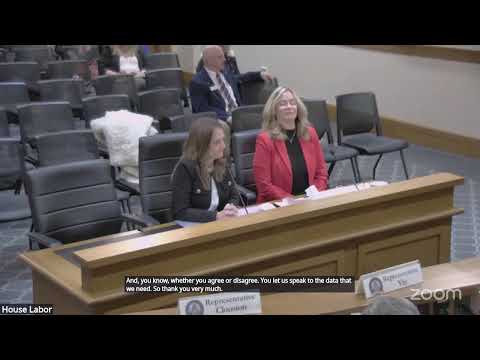
Cheyenne — At a meeting of the House Labor and Health & Social Services Committee, two national advocates urged Wyoming lawmakers to require more detailed toxicology testing and greater transparency around psychiatric prescribing following a recent murder‑suicide in the state.
Sheila Matthews Gallo, founder of AbleChild.org, and Amy Miller, a legislative advocate formerly affiliated with Reform Pharma, told committee members that better access to medical records, naming of treating psychiatrists and mandated toxicology for psychotropic medications are necessary to understand violent incidents and to inform policy responses.
The advocates said current reporting and investigation practices leave gaps. "Our mission is informed consent and the right to refuse psychiatric products and services," Gallo told the committee. She recommended that autopsies and death investigations routinely test for psychotropic medications and report therapeutic levels, and that medical examiners disclose which psychiatric drugs were present.
Why it matters
Gallo and Miller argued that many psychiatric drugs carry serious adverse‑event warnings and that multiple medications taken together (polypharmacy) have not been tested in combination. Miller told the committee that legislation in Tennessee sought to require medical examiners to test for and record psychotropic medications and to make that data available for research so policymakers can examine drug interactions and therapeutic levels.
What presenters recommended
- Require toxicology testing in deaths involving violence or suicide that specifically screens for psychotropic medications and records therapeutic levels, not just presence/absence. - Require medical examiners to record and report psychotropic drugs found in decedents and to preserve records for research. - Require prescribers to provide enhanced informed‑consent materials that list possible adverse effects, note that many drug combinations lack clinical trials, and offer an agreed taper or "exit plan" with oversight and recommended monitoring. - Strengthen reporting obligations so clinicians must report serious adverse events and be protected from retaliation when they disclose concerns.
Concerns raised about children, schools and prescribing
Both speakers said school systems and school‑linked health services commonly identify children for possible psychiatric treatment using checklists and that vendors and contracted providers can profit from increased prescribing. Gallo said school psychologists and other school‑based evaluators are a primary entry point for children into psychotropic prescribing. Miller and Gallo recommended caution in expanding school‑based clinics without safeguards, including parental notification, oversight and improved follow‑up and tapering plans.
On ketamine and FDA guidance
Gallo told the committee she had been told by a family member that ketamine had been used in the days before a recent Wyoming killing. She noted the U.S. Food and Drug Administration has issued public warnings about ketamine’s risks (including dissociation, hallucinations and memory effects) and that ketamine is not approved for all psychiatric uses. The presenters said those facts reinforce the need for clearer postmortem testing and record access.
Industry influence and data access
Miller said legislative drafting should specify which tests and levels are required so investigative authorities cannot "sideskirt" obligations. Both presenters criticized perceived industry influence on prescribing guidelines and the difficulty their groups have had obtaining medical and investigatory records in other cases. Miller said Tennessee's proposed autopsy bill includes language to require testing for psychotropic drugs and to record therapeutic levels so the data can be used for research.
Committee response and next steps
Members asked about Wyoming processes for post‑incident review, toxicology ownership of results and whether medical boards investigate prescribing. Committee members were told that police investigations typically secure medical records from treating clinicians and that controlled substances may involve federal agencies such as the DEA in some cases. A committee staff briefing on Wyoming data was scheduled for the following week.
At the close of the meeting, both presenters said they were available to meet individually with legislators and staff and urged the committee to invite additional experts to provide data and alternative perspectives.
Provenance
The committee hearing transcript contains the presenters’ remarks and committee questions; the presenters began by identifying themselves and their organizations and concluded by offering legislative recommendations and availability for follow‑up meetings.