Get Full Government Meeting Transcripts, Videos, & Alerts Forever!
Get email alerts on the Tenant Protections topic
No spam. Unsubscribe anytime.
Planning Department outlines tenant-protection ordinance to limit displacement during housing projects
Summary
Planning staff presented a draft municipal ordinance to codify and expand protections tied to California's SB 330 and to strengthen replacement, relocation, and notification rules for projects that would remove existing units. Community groups urged stronger, enforceable measures and immediate implementation alongside rezoning.
The San Francisco Planning Department on Feb. 27 presented a draft citywide ordinance to strengthen tenant protections tied to the Housing Crisis Act (SB 330) and to reduce direct displacement when new housing is built.
The department said the proposal would codify SB 330's "no net loss" requirement, clarify how units and tenancy are determined, require 1-for-1 replacement of protected units, and expand tenant-notification and relocation steps to improve implementation and enforcement. Planning staff said the ordinance is intended to be introduced alongside the housing-element rezoning this spring but offered as a stand-alone, citywide ordinance that would remain in place if the state law sunsets.
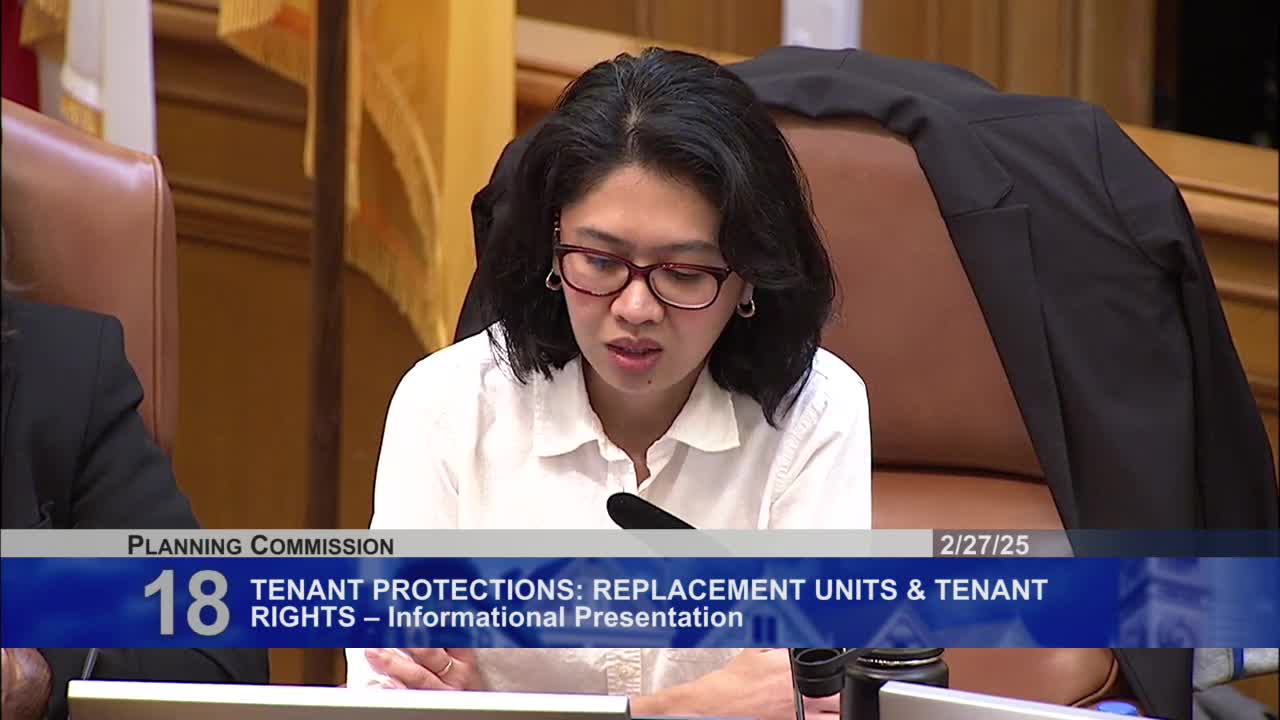
"The proposed ordinance scope is to do a targeted and strategic update to the municipal code to codify elements of SB 330 to minimize and mitigate the risk of direct displacement due to residential demolitions as new housing is built," Senior Planner Melina Leon Ferrera told the commission. Staff said the ordinance would require site inspections as part of demolition review, expand replacement definitions to include unauthorized dwelling units when appropriate, tie relocation assistance to permit milestones, and improve interagency tracking and notice to tenants.
Community coalitions, including Rep SF (Race and Equity in All Planning), the San Francisco Anti-Displacement Coalition and the Council of Community Housing Organizations, presented a joint set of detailed recommendations and urged immediate adoption of strong enforcement measures. Priya Prabhakar (Rep SF) and Amalia Macias LehiVenture (SFADC) described data from tenant counseling networks showing substantially more eviction filings and counseling calls than the Rent Board totals: "data from the eviction defense collaborative shows that there were over 2,000 evictions filed with the court last year," the presenters said, and their counseling network reported approximately 2,700 calls related to eviction threats.
The community groups recommended: mandatory pre-application site inspections for demolition and major capital-improvement projects; mandatory relocation specialists for projects that would displace tenants; certified "as‑built" drawings at submittal; automatic extensions of relocation benefits when construction is delayed; right-of-first-refusal and return rights for lower-income tenants; and explicit replacement of rent-controlled units as rent-controlled units (in addition to any new inclusionary or BMR units).
Planning staff said the city already has a range of tenant protections and that the proposed ordinance seeks to clarify and improve local implementation gaps in SB 330. "The proposed ordinance ensures continuity of protections even if the state legislation is allowed to sunset and it improves upon our rent ordinance," staff said. The department emphasized the need for interagency coordination with the Rent Board, the Mayor's Office of Housing and Community Development (MOHCD), and eviction-prevention providers.
No vote was taken; the item was presented for feedback. Planning staff said they will continue community consultations and refine the ordinance with the intention of introducing a legislative package in spring 2025 alongside the rezoning measures. Community groups urged the commission to press for adoption as soon as possible and to ensure dedicated funding and staff for relocation assistance and tenant counseling.
Commissioners praised the depth of the community recommendations and asked staff to clarify operational details, including how unauthorized dwelling units and undocumented tenants would be counted, how to align replacement definitions with state law and how relocation specialists would be funded and integrated into the permitting timeline.