Get Full Government Meeting Transcripts, Videos, & Alerts Forever!
Get email alerts on the Unemployment Insurance topic
No spam. Unsubscribe anytime.
Lawmakers hear business case to pay down $6.3 billion UI debt to ease burden on small employers
Summary
Small‑business groups and the NFIB urged the Legislature to use state funds to pay interest on New York's outstanding federal unemployment insurance advances, saying the debt is harming small employers; testimony described the debt, its cost to employers and the practical effects of delay.
Representatives of the National Federation of Independent Business and other small‑business advocates told the Joint Fiscal Committee New York's outstanding unemployment insurance (UI) debt to the federal government is harming small employers and urged the state to act.
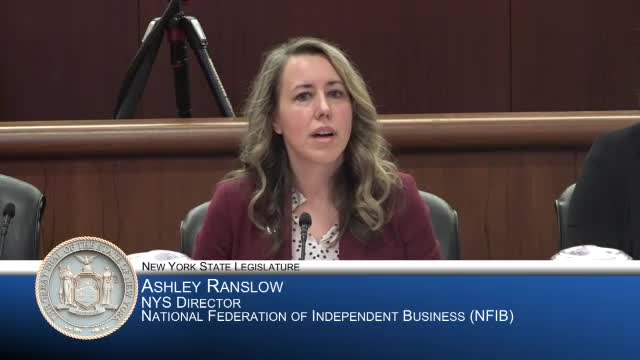
Ashley Ranslow, New York State Director for the National Federation of Independent Business, testified that New York still owes roughly $6,300,000,000 in federal advances from the pandemic era. She said the governor's executive budget proposes $165,000,000 to cover an annual interest assessment surcharge and that NFIB supports using state funds to pay that surcharge.
"Small businesses are also paying $105 in increased federal UI taxes. They're paying $250 per employee in state UI taxes," Ranslow said, summarizing the multiple cost layers small employers face because of the outstanding debt. She said the federal FUTA offset (currently raising employer federal UI tax) will double if the state does not retire its advances, increasing costs further.
The panel also heard that most other states used federal COVID relief to retire their UI advances; by contrast, New York and one other state remain with outstanding debt. Witnesses warned that as long as the debt remains, the state cannot increase weekly UI benefits and small employers shoulder higher tax burdens.
Legislators asked about the effects on cash flow and about the policy tradeoffs between using reserves or targeted revenue measures to retire the debt. Testimony urged a prompt resolution, with multiple witnesses noting that paying down the debt would reduce annual employer costs and remove a statutory barrier to benefit improvements.
The tax department and other administration witnesses said they were coordinating with Labor on UI issues and noted funding and program design implications for both employers and workers.