Get Full Government Meeting Transcripts, Videos, & Alerts Forever!
Get email alerts on the Education topic
No spam. Unsubscribe anytime.
Panel debates bill to suspend state aid after convictions or disciplinary findings for violent campus disruptions
Summary
House members and witnesses debated HB 602, a bill that would suspend state scholarships, loans or grants for two years for students convicted of or found to have engaged in violent, harassing or materially disruptive conduct on college campuses; civil liberties advocates warned of constitutional and due‑process problems.
The House Higher Education Committee heard HB 602 on Wednesday, a bill sponsored by Representative Fleming that would suspend state scholarships, loans or grants for two years for students who are convicted of, or found by an institution’s disciplinary body to have engaged in, specified violent, harassing or materially disruptive conduct on postsecondary campuses.
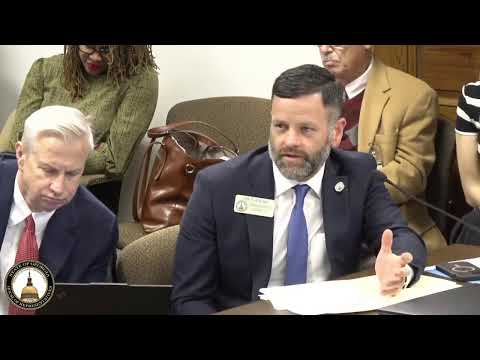
Representative Fleming told the committee HB 602 targets conduct that goes beyond peaceful protest and aims to protect the rights of students, faculty and staff to study and work without facing violence, vandalism or harassment. Fleming said the bill exempts constitutionally protected activity and asks the Student Finance Commission, the University System of Georgia (USG) and the Technical College System of Georgia (TCSG) to create sanctions and appeal processes.
Chris Bruce, policy and advocacy director for the ACLU of Georgia, told the committee he strongly opposes HB 602 and warned the bill’s broad language could chill protected speech and invite selective enforcement. Bruce cited major Supreme Court precedents and due‑process concerns, saying the bill’s definition of “materially disruptive conduct” is vague and could be applied on a viewpoint‑selective basis. “The Supreme Court has consistently ruled that speech cannot be suppressed simply because it is disruptive or controversial,” Bruce said, citing Tinker v. Des Moines (1969).
Bruce and other witnesses argued that HB 602 also raises equal‑protection and due‑process issues because students dependent on state aid could face disproportionate penalties compared with wealthier students who can afford protest costs. Committee members asked whether the bill would duplicate campus disciplinary systems and how the appeal process would work; Fleming answered that the bill leverages existing disciplinary procedures but adds the potential loss of state funding as an additional sanction and would require a separate state appeal process.
Committee members also asked practical questions about how the bill would treat demonstrations in “unrestricted outdoor areas,” how campuses notify students about reserved spaces, and how the bill would distinguish short, peaceful civil‑disobedience actions from conduct that rises to the bill’s standard of materially disruptive and violent behavior. Fleming and committee staff said they would invite representatives from USG and TCSG to explain how campuses manage reservations and apply conduct codes.
No vote was taken. Multiple speakers asked for more time to analyze the bill’s language and constitutional implications; committee leaders said the bill would return for further hearings.