Get Full Government Meeting Transcripts, Videos, & Alerts Forever!
Get email alerts on the Education topic
No spam. Unsubscribe anytime.
Committee considers bill to require residency verification for dual-enrollment students
Summary
The House Higher Education Committee socialized HB 18, which would require verification of legal Georgia residency for participants in dual-enrollment programs; proponents cited cost and consistency, opponents said the change would bar vulnerable high-school students from opportunities.
The House Higher Education Committee on Wednesday heard testimony on HB 18, a bill the committee’s sponsor said would require verification of legal Georgia residency for students participating in dual-enrollment programs, a change the sponsor said would align residency checks with current out‑of‑state tuition standards.
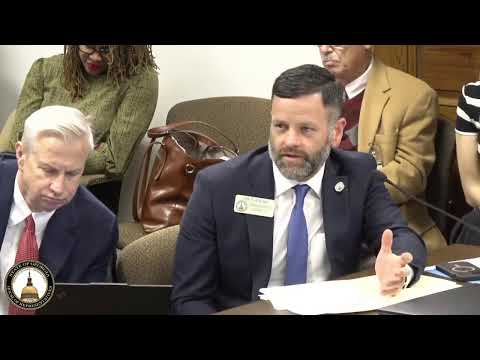
The measure’s sponsor (identified in the hearing only as the bill sponsor, a state representative) told the committee that dual enrollment is “a highly valuable program” whose costs have grown and that the bill aims to resolve what the sponsor described as “constitutional ambiguity,” citing the 1982 Supreme Court decision Plyler v. Doe as background for how K–12 residency rules have been interpreted. The sponsor told the panel that about 428 of roughly 21,000 dual‑enrollment students — about 2 percent, by the sponsor’s figures — are noncitizen or non‑Georgia residents and said dual‑enrolled students cost the state roughly three times as much per tuition hour compared with what the high school would pay.
Supporters and critics testified in the limited time allotted. Dr. Sinead Davis, the former director of Georgia State University’s Early College program, opposed the bill and described long‑term student outcomes from the early college model at a research university. “We have seen how it changes generations,” Davis said, citing program retention and graduation statistics from her tenure and the program’s reach to more than 750 students during that period. Giovanni Serrano, a community organizer with the Georgia Latino Alliance for Human Rights, said HB 18 would “discourage students who have high aspirations” and harm the mental health and economic mobility of immigrant and Latino students.
Committee members asked how the change would affect minors and younger dual‑enrollment participants. Representative Clark noted that many dual‑enrollment students are high school juniors and seniors — and sometimes younger students — and questioned whether children should be penalized for their parents’ residency status. The chairman responded by citing state law language on grants and loans (50‑36‑1) and said the sponsor was not creating new policy so much as seeking consistency with other residency standards.
No vote was taken. Committee leadership described the hearing as a “socialization” of the bill: the committee allotted limited testimony and said HB 18 would be returned for a later hearing with longer testimony and opportunities for remote participation. The sponsor and committee members indicated staff from the Board of Regents and technical colleges would be asked to provide additional enrollment and residency‑verification data in a subsequent hearing.
Why it matters: The bill would narrow eligibility for state‑supported college coursework taken while students remain enrolled in high school by requiring proof of legal Georgia residency, which supporters say would reduce program costs and increase consistency; opponents say it would remove access to life‑changing opportunities for first‑generation, low‑income and immigrant students.
What’s next: Committee members said they planned to bring HB 18 back for additional testimony and asked system staff to provide further data on the number of students affected and how residency has been verified in practice.