Get Full Government Meeting Transcripts, Videos, & Alerts Forever!
Get email alerts on the Agriculture Extension topic
No spam. Unsubscribe anytime.
CFANS and Extension outline how state special appropriation supports land‑grant research, outreach and 4‑H
Summary
College and extension leaders described distribution of an $85.5 million state special appropriation, the land‑grant origin of the funding, research and outreach centers across the state, and Extension’s role serving Greater Minnesota including 50,000 4‑H youth.
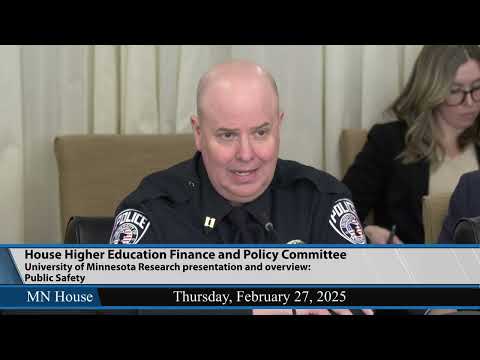
Deans from the University of Minnesota’s agricultural and extension divisions told the House Higher Education Finance and Policy Committee how state special appropriations fund land‑grant research, outreach and education statewide.
Brian Boer, dean of the College of Food, Agricultural and Natural Resource Sciences (CFANS) and director of the Minnesota Agricultural Experiment Station, said the state special appropriation the committee identified (line 223 in committee materials) is historically rooted in the land‑grant mission and funds research, extension and colleges that support agriculture and natural resources. Boer said roughly half of the state special portion for agriculture flows to CFANS, with other portions supporting Extension, the College of Veterinary Medicine, the College of Design, the Agricultural Experiment Station and the College of Biological Sciences.
Boer described CFANS operations across 10 research and outreach centers statewide, ongoing university involvement in crop and variety development, and the role of federal Hatch Act funding through the Farm Bill in supporting the Agricultural Experiment Station’s work. He said CFANS brings in roughly $75–$80 million a year in sponsored research and that state special base funding is critical to operating field‑scale and livestock enterprises that enable applied research.
Bev Durgin, dean of University of Minnesota Extension, told the committee that extension is a statewide presence, with about 65–70% of extension faculty and staff living in Greater Minnesota. She said state appropriations make up roughly 38% of Extension’s budget, with additional funding coming from county partners, federal Smith‑Lever funds and grants/gifts. Durgin highlighted Extension’s 4‑H youth programs, reporting more than 50,000 youth involved in clubs and additional youth programming across the state.
Committee members asked about the interaction of state grant shortfalls with tuition and fees, and about administrative staffing ratios and use of proceeds from past land sales. University budget director Julie Tonneson said changes to financial aid awards can affect enrollment and that the university would need to consider tuition, internal aid or other strategies to maintain enrollment if state awards fall; she said the university would provide additional detail on specific numbers if requested. Dean Boer said some proceeds from prior land sales have been used to support projects such as the Austin farm initiative and that the university would provide more detail to the committee on those allocations.
Why it matters: The agriculture and extension state special is the single largest line in the University’s state‑special spreadsheet presented to the committee. The appropriation supports research, county‑level extension work, youth development and applied projects that university witnesses said yield recurring economic and agricultural returns for the state.