Get Full Government Meeting Transcripts, Videos, & Alerts Forever!
Get email alerts on the Legislative Voting Roundup topic
No spam. Unsubscribe anytime.
Votes at a glance: key Wyoming House floor actions Feb. 27, 2025
Summary
A roundup of major floor votes and committee‑of‑the‑whole recommendations recorded during the Wyoming House session on Feb. 27, 2025, including concurrence votes, committee reports and enrolled acts signed by the governor.
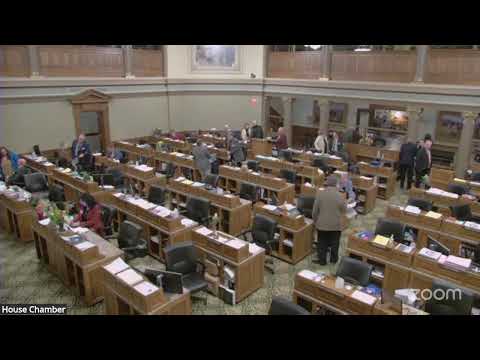
Here are the major formal actions recorded on the House floor on Thursday, Feb. 27, 2025. This list summarizes floor roll calls, committee‑of‑the‑whole reports and enrolled acts mentioned during the session; counts and outcomes are drawn from the House floor record.
• House Bill 199 (prekindergarten ESA — concurrence with Senate amendments): House concurred with Senate amendments. Recorded roll call: 42 yeas, 19 nays, 1 excused. (See full article on HB199.)
• Senate File 125 (defining health care / reproductive health definitions): Committee of the Whole reported the bill do pass with standing committee amendments after divisions and votes on parts of the committee amendment; divisions on the standing committee amendment passed on the floor. (See full article on SF125.)
• Senate File 17 (CO2 EOR stimulus): Committee of the Whole reported the bill do pass with a standing committee amendment; bill would provide $10 million seed loan and $10/ton incentive for in‑state CO2 deliveries with repayment from severance taxes; program tied to federal 45Q eligibility. Recorded as passed by committee of the whole; final House passage not captured in the excerpt.
• Senate File 22 (ground for termination of parental rights): Committee of the Whole reported the bill do pass; several Committee‑of‑the‑Whole amendments were adopted, including clarifying language for relative and guardianship terms; bill reported to be passed to Committee of the Whole in transcript.
• Senate File 196 (Second Amendment Protection Act amendments): Committee of the Whole reported the bill do pass with standing committee amendments; floor debate included questions about whether existing statutes had been inadequate; committee amendment clarified definitions and added peace‑officer language.
• A set of bills were read and acted on with limited floor discussion; many were reported by the Committee of the Whole as “do pass” and by standing committees. Examples recorded in the committee‑of‑the‑whole report include: Senate files 51 (telecommunications revisions), 58 (defense forces/unmanned aircraft critical infrastructure), 104 (probate code revisions), 97 (trust code revisions), 158 (insurance/dental virtual cards), among others. The transcript’s committee‑of‑the‑whole report at the end of the session lists multiple bills as “due pass (amended)” or “due pass.”
• Enrolled acts signed at the dais (ceremonial signing on the floor): the transcript records the Speaker signing multiple enrolled acts on the floor, including Senate Enrolled Acts 50–58 and House Enrolled Acts 48–49; the chief clerk recorded the titles as read aloud for the record (e.g., emergency bridge loan for small businesses, country‑of‑origin beef labeling, etc.).
How to read these entries: “Committee of the Whole reported do pass” means the Committee of the Whole voted to recommend final passage to the full House; a roll‑call tally is recorded when the chief clerk calls the roll (as with HB199). Items described as “enrolled acts” indicate bills that have completed both chambers and were being signed for the official enrolled record on the floor.
What reporters should watch next: bills reported do‑pass will appear later on the calendar for final action, or return to the other chamber for concurrence/enrollment. Items with constitutional or significant fiscal impacts (SF125, HB199, SF17, SF22) merit follow up for implementation language, appropriations and possible legal challenges.