Get Full Government Meeting Transcripts, Videos, & Alerts Forever!
Get email alerts on the School Budget topic
No spam. Unsubscribe anytime.
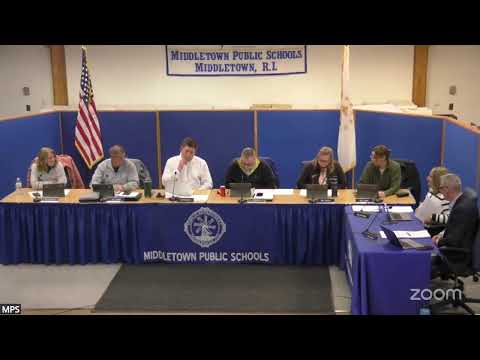
Middletown School Committee approves FY26 budget, asks town for 4% increase
Summary
The Middletown School Committee approved a $42.6 million FY2026 general fund budget on Feb. 27, 2025, and will request a 4% increase from the town; the budget includes level services, some staffing reductions and the restoration of the Beyond the Bell program into the district operating budget.
The Middletown School Committee approved the superintendent's proposed fiscal year 2026 budget on Feb. 27, 2025, voting unanimously to send a $42,600,053 general fund request to the town with a recommendation that the town adopt a 4% increase to help offset falling state and federal aid.
The budget, presented by the superintendent, was described as a “level service needs-based” proposal that increases the district request by $662,000 from the prior year — a 1.58% rise in appropriations — and, with a 4% town increase, would represent roughly $1.2 million of additional revenue available to the district. The superintendent said state education aid is down “just about $500,000,” federal direct aid is down about $67,000 and local revenues are down about $36,500, producing the $662,000 gap the budget addresses.
The proposal funds compensation and benefits as the district's largest expense and moves several previously town-funded technology capital costs into the schools' operating budget. The superintendent said, “our FY26 general fund request is 42,600,053,” and described the budget as “a clean budget that addresses immediate student need while starting to make long term investments.”
Why it matters: the committee’s approval permits town staff and the council more time to incorporate the school request into the municipal budget calendar. Committee members repeatedly noted the budget remains a living document: the committee may approve adjustments later as state aid figures, transportation bid results and negotiated contract outcomes become final.
Key elements and financial context
- Revenues and ask: The district requested a 4% increase from the town. With that assumption, the superintendent showed an additional roughly $1.2 million would be available; without it, the net increase in appropriations is 1.58% year over year. The superintendent warned state and federal education aid estimates can change, and some budget items remain variable.
- Enrollment and funding sensitivity: The presentation stressed declining enrollment as a major driver of fiscal pressure. The district reported losing about 100 students this year and gave a current enrollment snapshot of about 1,825 students; committee members noted the district’s military/transient population can change in November–March, affecting the October enrollment snapshot used in state funding formulas.
- Special education: The district reported 418 students currently have individualized education programs (IEPs). Thirty-nine students attend out-of-district placements; the superintendent said those placements and related transportation are unpredictable and can significantly affect costs.
- Staffing and program changes: The superintendent said the budget approach avoids broad, immediate layoffs where possible but identified a first group of position changes the administration has proposed to meet constraints: one districtwide full-time equivalent (FTE), three positions at the middle school, two full-time special education positions and one full-time maintenance position (the presentation framed these as position reductions or repurposings, not named layoffs of specific individuals). The budget would repurpose some funding to add a special education coordinator, a social worker for lower elementary grades and a multilingual learner (MLL) staff member at the middle level.
- Beyond the Bell and other programs: The administration placed the Beyond the Bell program into the operating budget to sustain it after ARPA and other one-time grants taper. The superintendent said the district budgeted $350,000 for Beyond the Bell and noted the program had previously received ARPA funding; committee discussion referenced a $365,000 ARPA allocation received earlier in the grant period. The superintendent told the committee the town’s ARPA support has largely run its course.
- Capital and technology: The presentation called out a roughly 210% increase in the district’s property capital line, explained as a phased move to fund some technology replacements within the district operating budget rather than relying entirely on the town’s Capital Improvement Plan (CIP).
Process, timing and next steps
The committee voted to accept the superintendent’s presentation earlier in the meeting and later voted to consider and approve the superintendent's recommendation to adopt the FY26 budget and forward it to the town. The committee chair stated approving the budget now gives the town council and municipal staff more time to work the numbers into the town budget; board members were told adjustments can be made later as final revenue figures and contract settlements become available. Members asked for and received confirmation that contract negotiations (three labor contracts were noted) and transportation bid results may change final numbers and that the district will return to the committee with any required amendments.
Committee discussion highlighted maintenance and building-preparedness steps taken this year, including preventive maintenance on boilers, generators and HVAC systems, as the district prepares for upcoming school construction reimbursement requirements.
Votes at a glance
- Motion to accept the superintendent’s presentation of the FY26 budget: Passed (voice vote). - Motion to consider and vote on the superintendent’s recommendation to approve the FY26 district budget: Passed (unanimous voice vote; five committee members present).
Attributions and transparency
Quotations and attributions in this article come from the meeting record and the assembled list of speakers. The superintendent — listed in the meeting record without a full name — is identified here as “Superintendent (name not specified)” when attributed. The committee discussed figures and program funding during the public meeting; the district and town retain the ability to revise the numbers as final revenue and contract data arrive.
The committee adjourned at about 6:17 p.m.