Get Full Government Meeting Transcripts, Videos, & Alerts Forever!
Get email alerts on the Homelessness topic
No spam. Unsubscribe anytime.
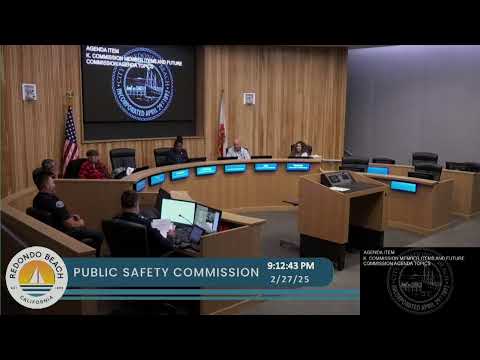
South Bay COG and CityNet tell Public Safety Commission Redondo Beach reached functional zero in mid-2024; census and casework explained
Summary
South Bay Cities COG and outreach contractor CityNet briefed commissioners on a multi-year census and outreach program they say produced a 1:1 housing-match ratio and rapid exits from street homelessness in Redondo Beach during Jan'Jun 2024.
Representatives from the South Bay Cities Council of Governments and contracted outreach provider CityNet told the Redondo Beach Public Safety Commission on Feb. 27 that the city achieved a one-to-one housing-match ratio (often termed "functional zero") for several months in mid-2024 and that median exit times from street homelessness were short.
Ronson Chu of the South Bay Cities Council of Governments said the regionwide effort uses a "by-names" list and coordinated case conferences to match available housing or shelter slots to people living on the streets. "We were able to do it in 14 days on average," Chu said of the median time to house or place people in interim shelter during the period the presentation measured.
CityNet supervisors Andres Hernandez and Haik Minassian explained their outreach workflow and the difference between the census they perform and the county point-in-time count. They said outreach workers attempt multiple contacts to build trust and then enroll people who accept services into the Homeless Management Information System (HMIS) so that regional providers and housing authorities can verify documents and place matched clients.
Chu presented six-month snapshot figures the council of governments compiled: Redondo Beach recorded approximately 65 new entrants to street homelessness over one six-month window and matched a roughly equal number into housing or shelter during the same period, which produced the one-to-one ratio that the COG uses to determine functional zero performance. Chu said the data set the community's median placement time at about 14 days and that the city's active case load fell to about 25 people in the most recent snapshot presented.
CityNet described additional services the contractor provides: outreach days, HMIS enrollment, assistance compiling identity and eligibility documents (birth certificate, state ID, Social Security card), referral to detox or shelters, and support with coordinated entry and voucher matches through LAHSA and local housing authorities. CityNet said voucher matches vary in speed: some clients get matched in weeks while others, especially those without prioritized chronicity or disabling conditions, may wait longer.
Commissioners asked for more granular, auditable data. The commission also received an update on the city's homeless court: the packet states the program had 19 active participants in 2024, three graduates to permanent housing, one graduate to interim housing, two exits for nonparticipation and two transfers to criminal court. The city said it would circulate vendor-level spending and contract attachments to commissioners for additional detail after the meeting.
Ending: Commission members said they would review the full CityNet census report and budget response reports. City and contractor staff said they would provide follow-up material and a written breakdown of homeless-service contracts and expenditures to commissioners.