Get Full Government Meeting Transcripts, Videos, & Alerts Forever!
Get email alerts on the Religion In Schools Release Time topic
No spam. Unsubscribe anytime.
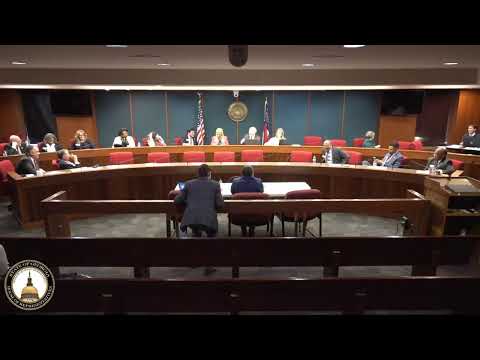
Committee tables bill on in-school release-time religious instruction after lengthy debate
Summary
House Bill 133, a proposal to codify release-time religious instruction during the school day, was tabled after committee debate about local control, liability, background checks and parental consent. Members amended language from 'shall' to 'may' and removed a deadline before tabling the measure by an 8–6 hand vote.
The Georgia House Committee on Education tabled House Bill 133 (LC492137) on Oct. 27 following extended debate over whether and how public schools may permit off-campus, release-time religious instruction during school hours.
Representative Clark presented HB 133 as a measure to confirm that parents may sign up students to attend community-sponsored religious instruction during the school day, citing Supreme Court precedent (noted in committee discussion) and multiple private and nonprofit programs already operating in Georgia and elsewhere. The sponsor and supporters emphasized parental choice and said some districts already host programs run by outside ministries.
Committee members raised a range of concerns. Members asked whether the proposal would require districts to adopt policies; the sponsor and amendment authors said the intent was to give districts the option rather than mandate a policy. In response, the author accepted an amendment that changed the statutory language on policy from "shall" to "may" and struck the July/August 2025 deadline language so that local districts would have discretion on timing.
Members also discussed background checks and liability for organizations that transport students off campus; proponents said many programs (for example, a program referenced in committee testimony, Lifewise Academy) conduct background screens and work directly with schools and parents to manage logistics. Committee members asked whether private providers should be required by statute to conduct background checks; sponsors said most programs already perform vetting and that districts commonly require volunteer/background checks.
The committee ultimately voted to table the bill for further work. The chair ordered a recorded show-of-hands presiding vote on the motion to table; the committee reported an 8–6 result in favor of tabling.
What’s next: Committee sponsors asked to continue conversations with members and district officials and to return with refined language. The tabling preserves the option to reintroduce or amend the measure at a later committee meeting.
Ending: Sponsors said the bill’s goal is to expand parental choice and keep families in public schools, while opponents and cautious members requested clearer statutory guardrails on liability, background checks and parental-consent mechanics.