Get Full Government Meeting Transcripts, Videos, & Alerts Forever!
Get email alerts on the School Facilities Capital Outlay topic
No spam. Unsubscribe anytime.
Committee backs raising capital outlay authorization amid construction-cost concerns
Summary
The committee recommended due-pass on House Bill 371 to increase the state's maximum authorization for capital outlay funding; members discussed application timing, entitlement formulas and inflationary effects on school construction funding.
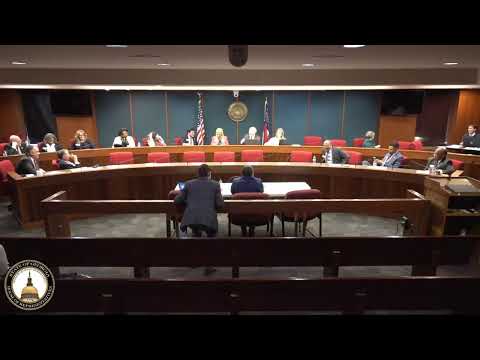
The Georgia House Committee on Education on Oct. 27 recommended House Bill 371 (LC492236) for a due-pass vote to increase the state's maximum authorization for the capital outlay program that funds school construction and major facility projects.
Representative (author) described HB 371 as an amendment to the Quality-Based Basic Education (QBE) capital outlay authorization. He told the committee the bill would increase the state's maximum authorization from $300,000,000 to 3.75 (amount/unit not specified in the committee transcript) to account for recent additions to the formula — including prekindergarten FTE — and rising construction costs. He said the cap had last been adjusted in February 2007.
Mike Sanders, introduced to the committee as director of facility services for the Georgia Department of Education, said every school system participates in the capital outlay program and that systems submit applications annually between July 1 and Aug. 15 for projects that would be funded two fiscal years later (for example, applications submitted in summer 2025 would be for FY2027). Sanders explained that the program uses districts’ five‑year facility plans and factors such as age of building stock, FTE and instructional units to determine awards; the program is not purely first-come, first-served.
Committee members asked whether the authorization change would take effect immediately and how the application timeline affected when districts could expect funds to be available. Sponsors said the change would be required this year for projects that districts would apply for in summer 2025 and that funding would begin to take effect in FY2027 if appropriated.
Representative discussion also touched on how the program sets entitlement levels and reimbursement rates, which the director said have not increased since 2012. Members expressed support for increasing the cap to account for inflation and the addition of prekindergarten FTE to the formula.
The committee moved, seconded and approved a due-pass recommendation for HB 371 by voice vote.
What’s next: The bill will be placed on the committee rules calendar for floor action. Sponsors and the department said details on application rules and reimbursement calculations remain subject to the Department of Education’s processes and future appropriations.
Ending: Committee members cited long-term facility needs and construction-cost pressures as the principal reasons to raise the statutory maximum, while the department urged districts to continue submitting five-year facilities plans for entitlement consideration.