Get Full Government Meeting Transcripts, Videos, & Alerts Forever!
Get email alerts on the Education Writing Pilot topic
No spam. Unsubscribe anytime.
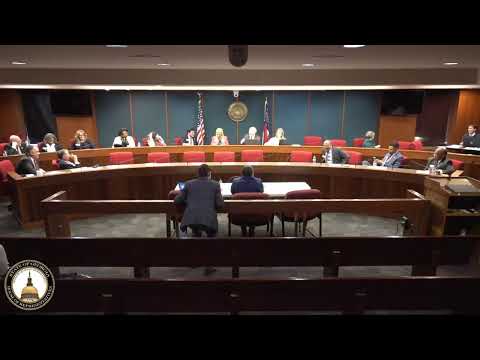
Committee approves 3-year immersive writing pilot and adds accessibility playground requirement for new elementary schools
Summary
The Georgia House Committee on Education gave a due-pass recommendation to a three-year immersive writing pilot for grades 2–5 and adopted a friendly amendment requiring inclusive playground standards for new elementary schools beginning construction on or after July 1, 2027.
The Georgia House Committee on Education on Oct. 27 gave a due-pass recommendation to House Bill 200, a three-year pilot that would let participating second- through fifth‑grade students write and publish a book through a state-facilitated program.
The bill’s author, Representative Baysmore, told the committee the pilot is designed to pair classroom instruction with a turnkey writing kit (teacher guides, student draft booklets and video lessons) that program providers estimate can cost about $30 per student. The program would be optional and implemented by local school systems that apply to participate.
Committee members asked how the pilot would be delivered, whether it relied on software or pencil-and-paper activities and how schools would handle distribution. Connie Crowley, introduced as the state department curriculum director by the bill’s sponsor, said the model emphasized pencil-and-paper drafting with the option for students to type their final text. She described the materials as a complete kit that includes teacher guides, student workbooks and videos to reduce teacher burden.
During discussion, Representative Dubnick offered a friendly amendment—cosponsored by others—that added language requiring accessible, inclusive playgrounds for any new elementary school whose construction commences on or after July 1, 2027. Representative Bazemore, whose original measure on inclusive playgrounds was folded into the amendment, outlined concerns that typical playground surfacing can be inaccessible to children with mobility aids and said private funding has helped some districts build sensory-diverse playgrounds. The committee voted to add the amendment.
Representative Carter moved to give HB 200 a due-pass recommendation; the motion was seconded and carried after debate and votes on the amendment. The committee then voted to advance the amended bill; members recorded one opposing vote during the final voice vote.
The amendment as adopted requires that, when a district chooses to build a playground at a newly constructed elementary school starting July 1, 2027, the playground meet minimum inclusion and accessibility requirements described in the amendment. The committee discussion made clear the measure does not require districts to build playgrounds but sets standards for those that do.
What’s next: HB 200, as amended, will be placed on the committee’s rules calendar for floor consideration. The bill as presented does not include a direct appropriation for statewide rollout; committee members said pilot participation will be optional and districts would apply to participate.
Ending note: Supporters framed the writing pilot as a literacy and youth-entrepreneurship initiative; proponents of the playground amendment described it as an accessibility and inclusion measure for children with disabilities.