Get Full Government Meeting Transcripts, Videos, & Alerts Forever!
San Marcos council sets parameters for FY26 budget: tax-rate range, debt split and targeted reserves
Summary
San Marcos City Council provided staff with formal budget parameters for fiscal 2026 on Tuesday, directing staff to present tax-rate scenarios between the current rate and the voter-approval rate, to allow the debt component of the tax rate to rise to as much as 30% over time, and to pursue higher utility reserves and conservative rate modeling.
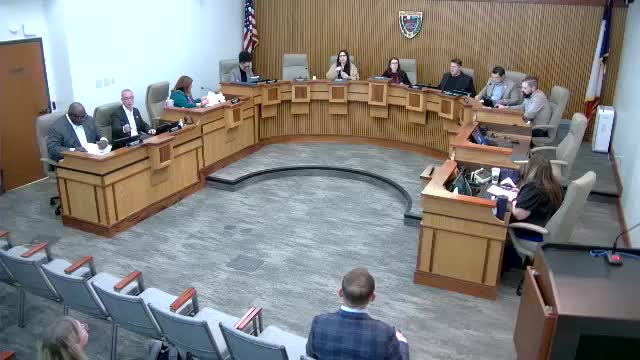
SAN MARCOS, Texas — The San Marcos City Council on Tuesday provided staff with budget-policy direction for fiscal 2026 that preserves a range for the property tax rate, widens the allowable share of the tax rate devoted to debt and sets reserve and funding priorities across city enterprise and special-revenue funds.
City finance staff briefed the council on assumptions behind the proposed FY26 budget and recommended guardrails for the city manager as staff prepares a proposed budget for August. Finance Director John Locke said the council’s guidance will be used to build scenarios for council consideration ahead of the formal budget adoption process.
Why it matters: Council’s choices now will determine whether the city increases operating or capital investments, and how much pressure is placed on ratepayers. The city faces an estimated FY26 shortfall under one forecast that staff said declined from roughly $5 million at visioning to about $2.5 million after updated revenue estimates and changes to assumptions.
What the council decided
- Tax-rate range: Council agreed to give staff direction to present budgets assuming a tax rate between the current rate (60.3 cents per $100 valuation) and the voter-approval (bond) rate (about 61.54 cents). Councilmembers expressed varying preferences within that range; several members said they wanted scenarios showing outcomes at intermediate rates.
- Debt-component cap: Council authorized staff to plan with the debt component of the tax rate allowed to increase to up to 30 percent of the total rate over a multiyear period (from an estimated roughly 25–26% now). Finance staff said that shift would be phased and would help fund planned capital improvement and equipment-replacement programs while preserving operating capacity.
- Reserve targets: For the electric enterprise the council supported the staff target of increasing cash-on-hand toward 180 days over the forecast horizon; staff will continue to pursue a debt-service coverage goal of about 1.4 for utilities (the legal minimum coverage is about 1.2). For other funds council directed…
Already have an account? Log in
Subscribe to keep reading
Unlock the rest of this article — and every article on Citizen Portal.
- Unlimited articles
- AI-powered breakdowns of topics, speakers, decisions, and budgets
- Instant alerts when your location has a new meeting
- Follow topics and more locations
- 1,000 AI Insights / month, plus AI Chat