Get Full Government Meeting Transcripts, Videos, & Alerts Forever!
Get email alerts on the Local History topic
No spam. Unsubscribe anytime.
Resident traces 4,000-year history of Lighthouse Point shell ring and local archaeology
Summary
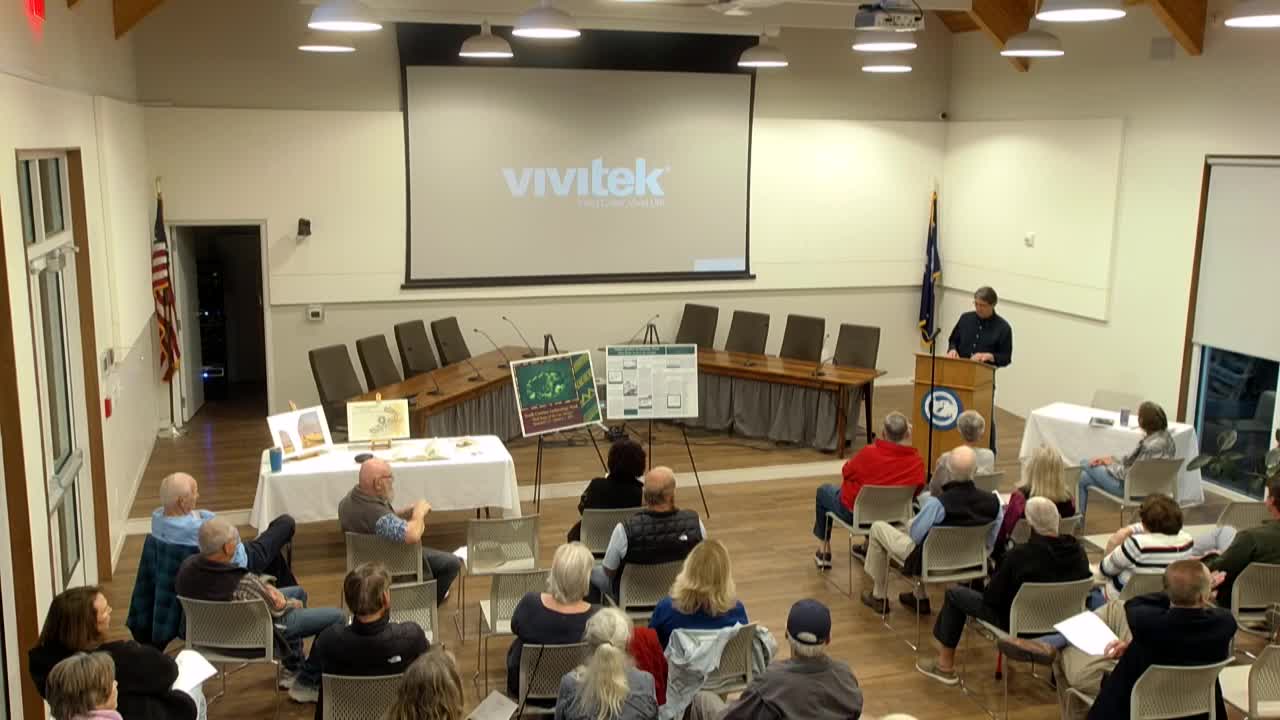
At the Feb. 27 Neighborhood Council meeting, a resident gave a historical presentation about Lighthouse Point and James Island, describing archaeological finds from an ancient shell ring, colonial-era ownership, Civil War batteries, and later uses of the land.
A resident at the Feb. 27 James Island Neighborhood Council meeting presented a prepared history of Lighthouse Point and the shell ring features found on James Island, recounting archaeological discoveries and later historical uses of the land.
The presenter said the area’s earliest occupation dates to more than 4,000 years ago, when Native Americans built shell rings along the Southeast coast. She described published measurements attributed to Governor John Drayton in 1802, which she quoted as noting a circular feature about 240 paces across and 8 to 10 feet high.
The speaker described University of North Carolina archaeologists’ work in the 1970s and said neighborhood members had earlier bulldozed portions of the rings; she said lower parts of the mounds remained and that the site is now protected from construction. Artifacts discussed included animal bones (notably deer), antler tools, polished bone pins with engraved designs, and pottery sherds. The presenter said shells from the mounds historically were used locally to make stucco for Saint Michael’s Church and for road construction.
The talk also covered later periods: 19th-century owner Thomas Legree (the site was once referred to as Legree Point), Civil War batteries built at Lighthouse Point — Battery Haskell, Battery Tatum and Battery Ryan — and references to Battery Wagner on nearby Morris Island. The presenter said the batteries saw action during the Civil War and that Captain and diary sources were cited for details on construction and personnel.
She described postwar uses including an orphanage called Sheltering Arms operated by Reverend Cornish and noted that records for some periods are incomplete because of fires and hurricanes. The presenter invited attendees to examine some related artifacts on a table at the meeting and said the Lighthouse Pointe Civic Club had played a role in saving parts of the site from development in the mid-20th century.
Why it matters: The presentation summarized archaeological and local-historical material that residents and local historians use to interpret and preserve cultural resources on James Island. The speaker also identified several periods when the site was altered by later construction or resource use, which complicates efforts to conserve archaeological features.
The presenter did not provide written citations for all claims in the meeting briefing; she said she relied on archaeological reports, newspaper articles and state records. The Neighborhood Council meeting audio records include the speaker’s full remarks and an archaeological report referenced by the presenter.