Get Full Government Meeting Transcripts, Videos, & Alerts Forever!
Get email alerts on the Minimum Wage Dsp topic
No spam. Unsubscribe anytime.
Committee holds minimum-wage indexing bill to allow time for CPI, budget and DSP implications to be assessed
Summary
The committee voted to hold CB 5 (2025), which would index the county minimum wage to the consumer price index and create a formula for a direct-support-professional (DSP) wage supplement; committee took the testimony of DSP providers and family members and asked for fiscal detail before moving forward.
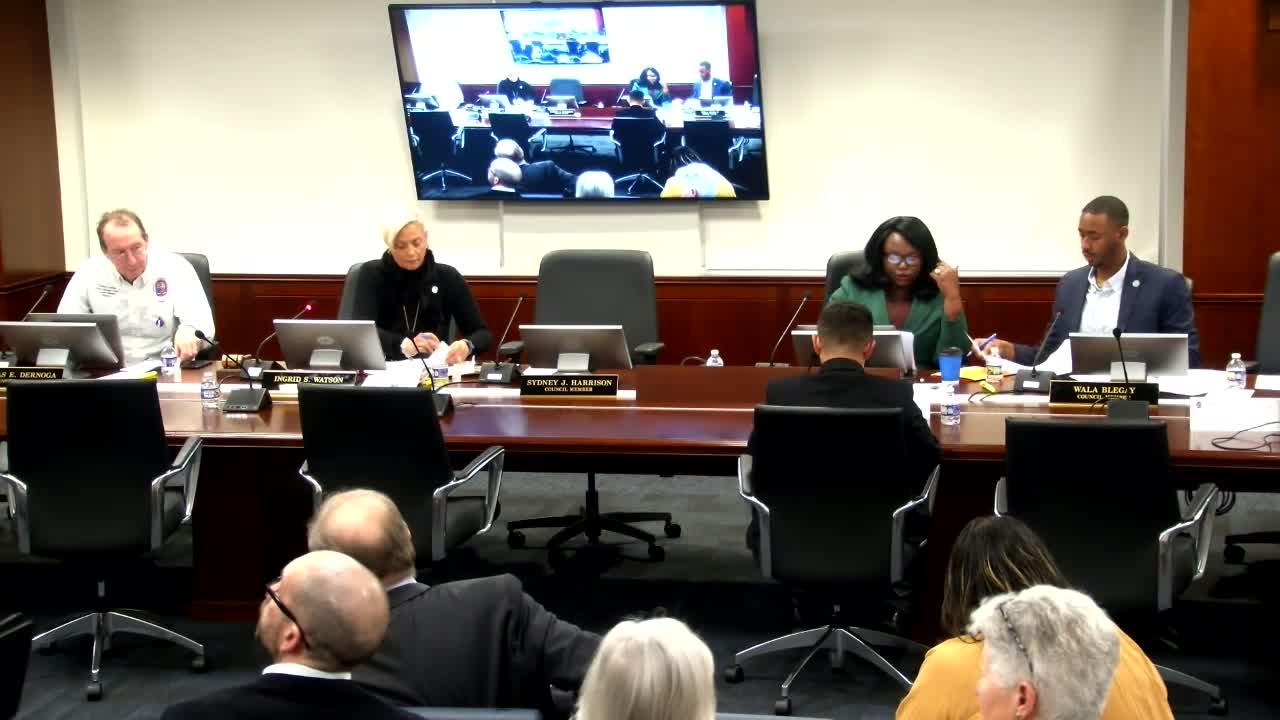
Prince George's County’s Government Operations and Fiscal Policy Committee on Feb. 27 voted to hold CB 5 (2025), legislation that would index the county minimum wage to the Consumer Price Index (CPI) with a 5% cap, and would establish a county-funded wage supplement mechanism for direct support professionals (DSPs) who provide services to residents with intellectual and developmental disabilities.
What the bill would do CB 5 directs the county’s director of finance to set the county minimum wage each March 1 based on the prior 12 months’ CPI data, subject to a 5% cap, and requires a funding formula for the DSP supplement to ensure wages of those providers remain commensurate with the county minimum wage and within county fiscal capacity.
Why it matters: providers and families Providers and families testified that the DSP supplement stabilizes a highly mobile workforce: the Prince George’s Provider Council and multiple provider chief executives said the supplement had increased pay roughly 13% since the prior fiscal year, reduced vacancy rates (from roughly 25% to 18% per provider testimony) and lowered the number of approved but unfunded people from about 50 last year to 23 this year. A parent, Lisa Shames, described an incident in which regular DSP staff recognized a medical emergency affecting her adult daughter and facilitated emergency care; she said consistent, experienced staffing saved her daughter’s life. Providers warned that state reimbursement changes or cuts could shift costs to the county if state rates do not match county minimum-wage increases.
Fiscal and administrative considerations County staff said the fiscal impact depends on whether the state adjusts reimbursement to match the county increase. If the state raises DSP reimbursement rates in line with the county increase, the county could avoid added costs; if not, the county would be expected to make up the difference under the bill’s funding formula, creating potential budget exposure. The acting county executive’s office indicated support for the concept but recommended more analysis of budget impacts; the Office of Law found no legal impediment.
Committee action Committee members moved to hold CB 5 until the March 1 CPI calculation and additional budget clarity; the motion to hold carried 3–0. Members said they wanted updated CPI data, a clearer estimate of budgetary impact and answers about state revenue/reimbursement prospects before proceeding.
Next steps: The sponsor and staff will return after March 1 with updated CPI and revenue projections, and with additional fiscal modeling reflecting potential state reimbursement scenarios.
Speakers quoted in this article are drawn from provider testimony and committee discussion recorded in the Feb. 27 transcript.