Get Full Government Meeting Transcripts, Videos, & Alerts Forever!
Get email alerts on the School Facilities Wildfire Response topic
No spam. Unsubscribe anytime.
State officials describe emergency steps to keep students learning after Southern California wildfires
Summary
State education and finance officials told the Senate budget subcommittee about timelines and funding options to keep students learning after recent wildfires, including ADA hold‑harmless waivers, expedited interim school sites, and possible use of Proposition 2 funds to speed facility repairs and rebuilds.
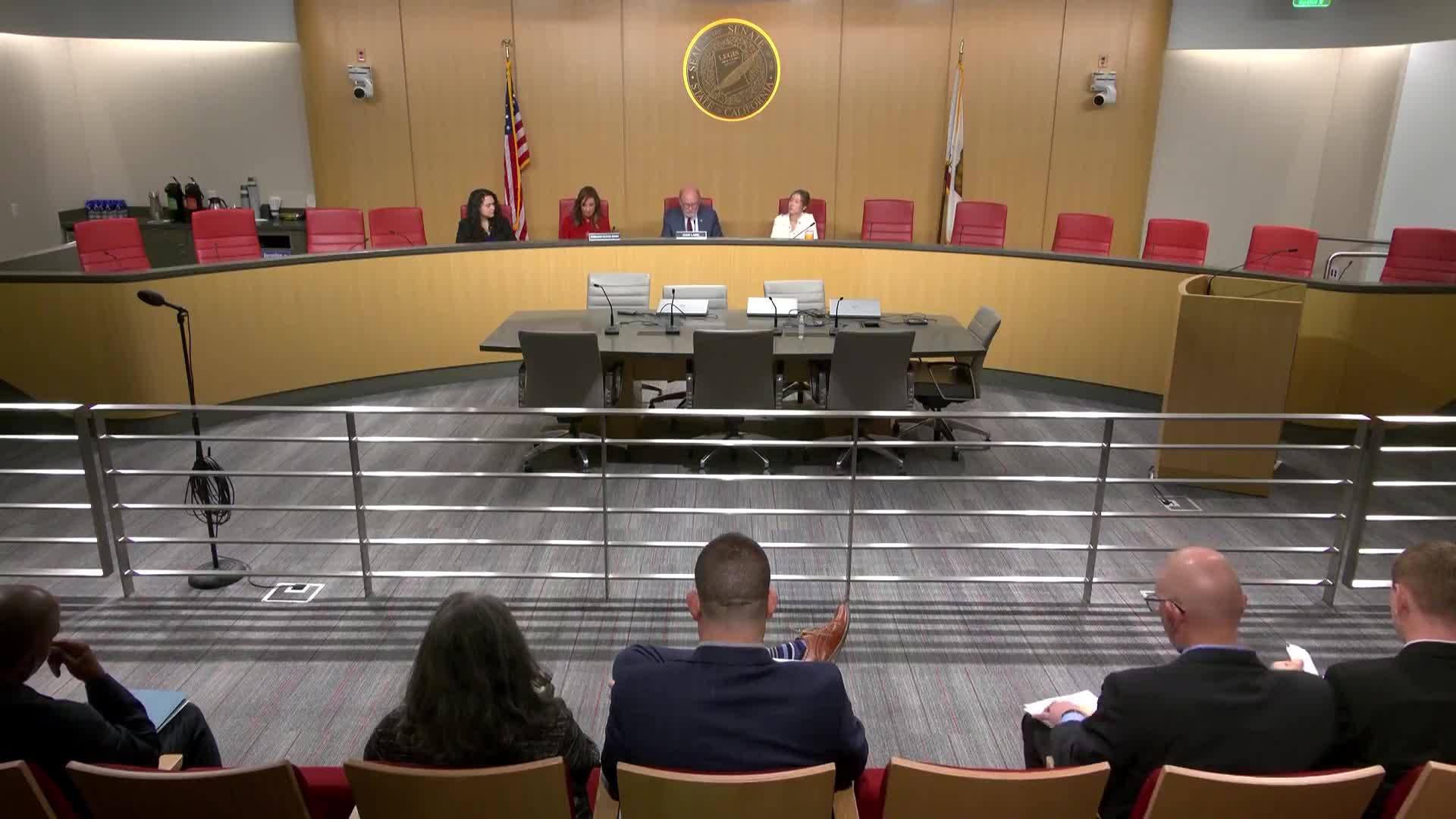
State education and finance officials told the Senate Budget Subcommittee No. 1 on Education on March 13 that emergency actions are in place to protect school funding and get students back into classrooms after recent Southern California wildfires.
The testimony focused on short‑term protections for average daily attendance (ADA), interim school sites for displaced students, and longer‑term facility funding and reconstruction. Jessica Holmes of the Department of Finance said the governor’s office has proposed intent language to provide “an additional year of ADA hold harmless for fire‑impacted schools,” and Rebecca Kirk, executive officer of the Office of Public School Construction, said interim school sites were identified and students had resumed instruction by Feb. 14 in the eight public schools that had been displaced.
Why it matters: ADA determines how much state funding districts and charter schools receive under the Local Control Funding Formula (LCFF), so sustained drops in attendance can reduce revenue. Many of the students displaced by the fires attend charter schools, which generally are paid on current ADA and do not automatically receive the same multi‑year protections as most school districts. Committee members and witnesses warned that without clear, timely state action, affected schools risk budget and staffing instability in coming years.
Officials described a three‑phase response. First, the California Department of Education (CDE) has used the J13A emergency ADA waiver process to fund lost ADA in the current year; Jessica Holmes said that process “ensures that schools are funded for any emergency‑related lost ADA or declines in enrollment.” Second, agencies and local districts worked to find interim sites so students could resume instruction quickly; Rebecca Kirk said that by Feb. 14, seven of the eight displaced public schools had resumed in‑person instruction. Third, state and local partners are planning longer‑term recovery, including damage assessment, debris removal and reconstruction, and possible multi‑year supplemental payments for districts with permanent ADA declines.
“The governor and the entire cabinet moved down to Southern California and no priority was more important than trying to make sure to provide stability for families who are being displaced by those fires,” Brooks Allen of the State Board of Education told the subcommittee, citing fast executive action and interagency coordination.
Charter schools and funding mechanics
Multiple witnesses and public commenters highlighted that the majority of displaced students in this episode attend charter schools, which “only receive funding on current ADA and do not have the hold‑harmless protections,” John Wenger of the California Charter School Association said. The Department of Finance and legislative staff acknowledged this difference and said trailer‑bill language and intent language accompanying the governor’s budget are being developed to include charters in any ADA protections.
Office of Public School Construction (OPSC) work and Prop 2
Rebecca Kirk said the state allocation board adopted a temporary policy to allow Proposition 2 authority (the bond measures and implementing rules enacted after the November ballot) to be used for disaster responses and that the board reserved remaining general‑fund authority for school facility program assistance. Kirk said that Prop 2 changes “provide new authority to the state allocation board to specifically consider requests from school districts impacted by natural disasters for which the governor declared a state of emergency,” including help procuring interim sites and site work to place portables. She told the committee that, given the newness of the Prop 2 authority, the agencies are developing regulations and guidance but have already adopted interim procedures to speed aid.
Longer‑term recovery and precedent
Officials pointed to prior examples—especially the Camp Fire in Paradise (2018)—where the state used multiple years of supplemental payments and technical assistance (including FCMAT support) to help an impacted district transition to a smaller post‑disaster operating footprint. Jessica Holmes said the administration plans to consider funding FCMAT to help fire‑impacted districts develop multi‑year fiscal plans in the May revision. FCMAT’s chief executive officer Mike Fine warned the committee that some small, rural districts can reach insolvency quickly if they lose modest numbers of students because “a district of 100 kids that loses 4 families is a significant percentage of their enrollment.”
Operational flexibilities and waiver use
Witnesses described multiple regulatory flexibilities and executive orders that were used to waive routine requirements (for example, certain material revision rules for charter relocation and short‑term independent study rules) so schools could continue instruction and maintain funding eligibility. Juan Morales of the Department of Education and other CDE staff said they are reviewing whether material decreases in ADA caused by immigration‑related fears or other disaster‑driven displacement qualify under existing J13A and related provisions, and they expect to issue guidance.
Local impacts and outstanding needs
Officials and local representatives reported a range of local impacts: some districts face steep short‑term operational costs and uncertain property‑tax losses (the Department of Finance estimated a roughly $30–$60 million property‑tax hit in some affected counties), many displaced students attend charters, and interim site solutions vary by locality. Mike Fine said some districts already have borrowed from alternative liquidity sources and that, for at least one district (Plumas Unified), a state emergency loan may be required.
What’s next
Witnesses told the committee they will continue to develop trailer‑bill language, coordinate agency reviews of J13A and independent‑study rules, and present options in the May revision. Rebecca Kirk said the state allocation board is prioritizing Prop 2 requests from the most heavily impacted districts and working to shorten regulatory timelines. Committee members urged rapid, clear communication about available assistance and asked agencies to flag additional statutory changes if needed.
Ending note: Several speakers emphasized that the state has “learned” from past disasters and that stronger interagency coordination and use of nontraditional partners (including the U.S. Army Corps of Engineers for debris removal) enabled a faster initial response. Officials warned that rebuilding and fiscal recovery will be a multi‑year process and that some funding and policy decisions will remain subject to the May revision and subsequent trailer‑bill work.