Get Full Government Meeting Transcripts, Videos, & Alerts Forever!
Get email alerts on the Hospital Financial Assistance Debt topic
No spam. Unsubscribe anytime.
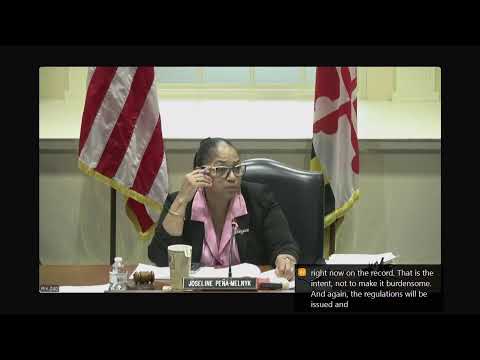
Subcommittee amends hospital financial assistance bill, bars some medical‑debt collection and extends notice periods
Summary
House Bill 268 would change hospital financial assistance and medical‑debt collection rules; the subcommittee adopted amendments and recommended the bill to the full committee.
House Bill 268 would change hospital financial assistance and medical‑debt collection rules in Maryland. The Health and Government Operations Subcommittee adopted amendments and recommended the amended bill to the full committee.
The amended bill requires hospitals to reduce a patient’s out‑of‑pocket costs for medically necessary care by a stated percentage tied to family income, prohibits a hospital from filing civil actions to collect medical debt under specified circumstances, extends the period before interest may be assessed or civil collection may begin from 180 days to 240 days, and alters notice and payment‑plan requirements. The amendments also remove the ability of a hospital to include a professional fee under its debt‑collection policy and require hospitals to obtain documentation that a patient acknowledged receipt of the facility’s financial‑assistance policy before discharge. One amendment addresses contract‑related limitations on statutes of limitation, striking language that had created a 12‑year limitations provision for certain contracts “under seal” and clarifying that the protections in the bill apply to consumer obligations arising from hospital services.
Committee discussion focused on whether the floor for income‑based reductions would affect hospital global budgets. “I did, contact HSCRC, the person who knows the most about the numbers and she said there would be no impact and in fact it would be continue to be recorded as uncompensated care which is calculated into their, global budget each year,” Delegate Kipke said during questions in subcommittee. Delegate Kerr told the panel that the Maryland Hospital Association testified in subcommittee and “expressed their agreement and acceptance of the amendments.”
The subcommittee moved and seconded the amendments and then the bill; the committee took a voice vote and the bill passed in subcommittee. During the roll call for sponsors, several delegates declined to be listed as co‑sponsors (the transcript records members who “did not want to be on the bill” for the record).
What the subcommittee decided: the bill advances with the subcommittee’s amendments, and the measure will proceed to the full committee with the changes described above.
Quoted from the hearing:
“I did, contact HSCRC ... and she said there would be no impact and in fact it would be continue to be recorded as uncompensated care which is calculated into their, global budget each year,” Delegate Kipke said.
“Maryland Hospital Association came to the subcommittee to express their, agreement and acceptance of the amendments,” Delegate Kerr said.
Ending: The amended bill moves to the full committee; the subcommittee’s action leaves several implementation details to hospital administration and later rulemaking or guidance.