Get Full Government Meeting Transcripts, Videos, & Alerts Forever!
Get email alerts on the Higher Education Health Workforce topic
No spam. Unsubscribe anytime.
Wyoming House approves bill limiting diversity, equity and inclusion programs and funds 5 medical school seats
Summary
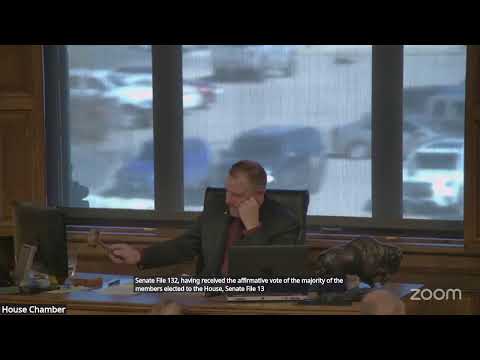
The Wyoming House on final passage approved Senate File 103, legislation described in the chamber as terminating or limiting diversity, equity and inclusion (DEI) programs in state government and higher education.
The Wyoming House on final passage approved Senate File 103, legislation described in the chamber as terminating or limiting diversity, equity and inclusion (DEI) programs in state government and higher education.
The bill’s passage followed three amendments. The House adopted a non‑substantive change to a section title, approved an amendment that adds an appropriation to pay for five medical‑school seats at the University of Utah and rejected an amendment to clarify the bill would not limit donor‑restricted private gifts.
Supporters said the Utah seats amendment was intended as an immediate, practical step to secure training slots for Wyoming students. Representative Larson Lloyd, who brought the amendment that funds five seats, said some seats are at risk because other states may take them and that the appropriation would secure five rural‑division slots at the University of Utah for Wyoming students. The amendment included language saying students “receive medical education and training under this section should comply with the state of Utah’s diversity, equity, and inclusion laws” for the instruction provided at that campus; supporters said that language aligns training with the bill’s policy aims.
Opponents raised constitutional and fiscal concerns. Representative Brown argued altering the bill’s substantive purpose on the floor risked unconstitutional change. Representative Bair warned the appropriation is the first year of a multi‑year funding stream that would grow as cohorts enroll and urged delaying the spending to the next budget cycle. Lawmakers who supported the appropriation described it as an investment in recruiting physicians to rural Wyoming and said seats could be lost without immediate action.
A separate amendment that would have clarified the bill does not prohibit spending private donor funds or restricted gifts failed after division; proponents of that amendment said they wanted to ensure the bill would not unintentionally bar some charitable donations or donor‑intended projects.
Roll‑call votes recorded in the House: third‑reading amendment 2 (the University of Utah seats and appropriation) passed 32 ayes, 27 noes, 3 excused. The bill, as amended, passed final reading 52 ayes, 7 noes, 3 excused.
What the amendment does: it provides a $550,000 appropriation in the first year to pay for five seats at the University of Utah’s rural medical training program and anticipates ongoing funding to cover successive cohorts, according to debate in the chamber. Lawmakers noted funding would increase in subsequent years as more cohorts are funded.
Supporters framed the amendment as a narrow, time‑sensitive fix to retain training slots for Wyoming students; opponents said the floor amendment changed the bill’s scope and raised concerns about process and fiscal timing.
The House moved the bill forward after the votes; the transcript shows the chamber adopted the amendment changing a section title earlier in the day and then considered the appropriation amendment and the donor‑intent amendment before final passage.
Votes at a glance: third‑reading amendment 1 (title change) — adopted by voice; third‑reading amendment 2 (University of Utah, $550,000 for five seats) — adopted 32–27–3 (aye–no–excused); third‑reading amendment 3 (clarify donor intent/private funds carve‑out) — failed; final passage — adopted 52–7–3 (aye–no–excused).
Next steps: the bill, as amended, will be forwarded to the Senate (or to enrollment, as appropriate) consistent with legislative process.