Get Full Government Meeting Transcripts, Videos, & Alerts Forever!
Get email alerts on the Agriculture topic
No spam. Unsubscribe anytime.
Polk County approves $20,000 for NREC; commissioners decline requested increase
Summary
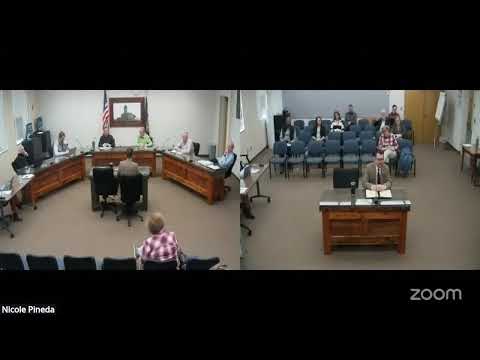
After a presentation from OSU Extension interim director Sam Angima, the Polk County Board of Commissioners voted unanimously Feb. 25 to maintain a $20,000 annual contribution to NREC rather than the $23,000 requested. Commissioners asked for an itemized budget from the center before considering future increases.
The Polk County Board of Commissioners voted unanimously on Feb. 25 to provide $20,000 in funding for NREC for the coming year, declining a $23,000 request from the center.
Sam Angima, interim director with OSU Extension and the local NREC liaison, described research and extension work at the center, including programs on berry crops, nursery and tree fruit trials, new varietal releases and agrivoltaics soil-health studies. Angima said the station now has 11 employees, an OSU payroll for roughly $1,300,000 in staff salary support, new cold-storage capacity planned for the berry program and recent investments in security fencing and cameras.
Angima asked the board to consider increasing Polk County’s contribution to support infrastructure and programming. "We're reinvesting it," Angima said, describing on-site improvements and the center's role in regional farm support.
Why it matters: The county’s contribution helps operate a research and extension hub used by local farmers and small businesses in the valley; commissioners said they want clearer financial detail before committing additional county funds.
County staff member Hansen summarized the request in the packet and recommended maintaining last year’s $20,000 contribution. One commissioner said the county’s economic development fund faces other obligations and potential revenue uncertainty and preferred holding the line at $20,000 pending review of the center's itemized budget.
An advisory-committee member at the meeting said the seven counties expected to contribute to the center have not all been consistent with payments and pressed NREC for clearer accounting. Commissioners asked OSU/NREC to provide an itemized budget and a list of contributors at a future meeting before considering any additional increase.
The board’s formal motion — "hold it to $20,000 per year for NREC" — was moved from the dais and seconded; the motion passed by unanimous voice vote. The board gave no additional restrictions on how the $20,000 must be spent but discussed the expectation of public accounting for contributors and expenditures before future requests.
Angima described several ongoing research items that county funding helps support: a hazelnut variety scheduled for a single-gene release in 2025 and a multi-gene release expected in about two years; agrivoltaics trials showing rapid soil-health differences; irrigation-sensing work and plans for expanded Wi-Fi coverage of the research station by August. Angima also said OSU has increased services and supplies spending roughly 15% over the last two years and that an additional $100,000 in services was planned with a new station director arriving in mid-June.
The vote: motion to fund NREC at $20,000 for the coming year — approved unanimously.