Get Full Government Meeting Transcripts, Videos, & Alerts Forever!
Get email alerts on the Cybersecurity Procurement topic
No spam. Unsubscribe anytime.
Georgia House declines to reach required threshold on procurement ban targeting products tied to foreign adversaries
Summary
House Bill 113 would have let the Georgia Technology Authority and state purchasing prohibit purchases of certain foreign-made technologies identified by federal lists; the measure failed to receive the constitutional majority after a 148–17 roll call.
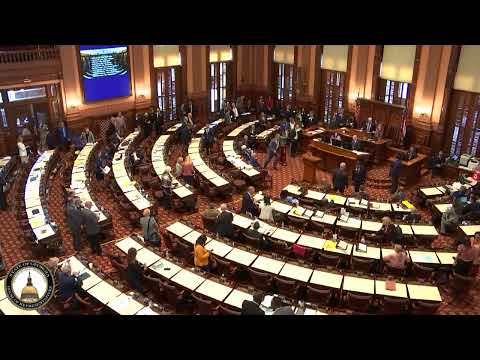
House Bill 113, a proposed update to state procurement rules that would have authorized the Georgia Technology Authority (GTA) to publish a list of companies and products tied to foreign adversaries and barred state agencies from contracting with them, failed to reach the constitutionally required threshold in the Georgia House on Feb. 27.
Representative Lauren McDonald, sponsor of HB 113, presented the bill as a cybersecurity measure that would protect state systems by relying on federal determinations of risk. The bill directed GTA to compile and maintain a public list based on federal guidance (for example from the U.S. Secretary of Commerce) and authorized the Department of Administrative Services to enforce procurement prohibitions. McDonald said fines for violations would be $250,000 or triple the purchase value, whichever is greater.
Members asked technical questions about scope and retroactivity. Representative Wilkerson asked whether the bill would apply to consumer apps flagged by Congress and a presidential executive order; McDonald replied that GTA would determine applicability and that the measure targets procurement, not all consumer use. Representative Jasmine Clark and others asked about component parts and whether products with parts from flagged countries could be affected; McDonald said GTA and DOAS would use federal lists and work through component determinations.
Representative Anderson asked whether the bill helped protect the state and its citizens; the sponsor and backers said yes. Representative Romain raised concerns about rapidly shifting international designations and the need for a flexible definition (the sponsor had removed explicit country names and adopted a federal definition of "foreign adversaries").
The House recorded 148 yeas and 17 nays, but the clerk said the tally did not reach the requisite constitutional majority for passage and the bill did not advance on the floor.
What’s next: Because the measure did not pass on the floor, HB 113 will not advance this legislative day. Supporters said they may refine the language and return in a future session, while opponents described concerns about implementation and unintended impacts on procurement for schools and local governments.