Get Full Government Meeting Transcripts, Videos, & Alerts Forever!
Get email alerts on the Energy Community Choice topic
No spam. Unsubscribe anytime.
Rhinebeck board to consider five‑month interim energy contract after higher renewable bids
Summary
Town board was briefed on community choice aggregation bids that came in higher than expected and will consider a five‑month interim contract to preserve the local program while prices potentially fall.
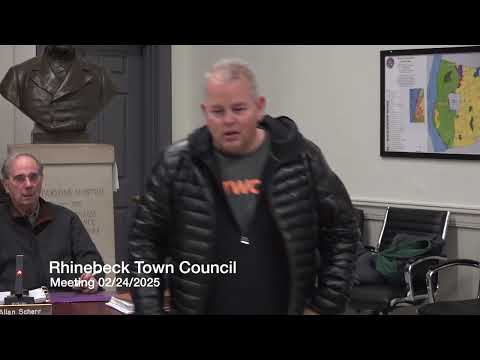
The Town of Rhinebeck Town Board heard a briefing on the town's community choice aggregation program and will consider at its March meeting whether to approve a five‑month interim contract to preserve service for residents.
Board members were told the bids for a fully New York State–sourced renewable power option came in higher than projected. The interim offer from Direct Energy would lock in a 50 percent non‑fossil fuel product from July 1 through Nov. 30 to maintain continuous coverage while the town and its aggregator seek better longer‑term pricing.
A Town Board member (name not specified in the transcript) said the interim contract was presented by Glenn, a representative of Direct Energy. "We believe Jewel believes that sometime between July and November, prices will come down a little bit, and we'll be able to reconsider," the board member said, describing the rationale for an interim agreement. Glenn confirmed the summary to the board.
Board members discussed how the chosen product would shift from a New York State‑generated renewable product to a 50 percent non‑fossil product (the board and Direct Energy described it as a 50 percent offering because only half of the supply would be generated in New York State). The board member said the proposed interim rate would remain lower than the two‑year average Central Hudson supply rate.
Separately, the board discussed constituent confusion about rising utility delivery charges. A Town Board member (name not specified) said delivery fees charged by Central Hudson were a primary driver of high household bills and suggested the board consider a formal resolution to the governor and state regulators to urge action on delivery charges. "Central Hudson is using our residence as a cash register, and it's really hurting people," the board member said during the discussion.
The town will put the interim contract before the board at its March meeting; the board must vote to enroll in the five‑month offer if it wishes to continue community choice aggregation without interruption.
How to follow up: the board requested a March agenda item to approve or reject the interim contract and signaled it wants clearer communications for residents about how delivery charges are separate from the community choice product.