Get Full Government Meeting Transcripts, Videos, & Alerts Forever!
Get email alerts on the Cultural Heritage Protection topic
No spam. Unsubscribe anytime.
Committee approves bill to raise penalties and document petroglyphs on state lands after amendment removes appropriation
Summary
Senate File 91, which would increase penalties for damaging rock images on state lands and establish a program to document petroglyphs and inscriptions, was advanced after the committee adopted an amendment that deleted a proposed appropriation but kept authority for surveys and documentation.
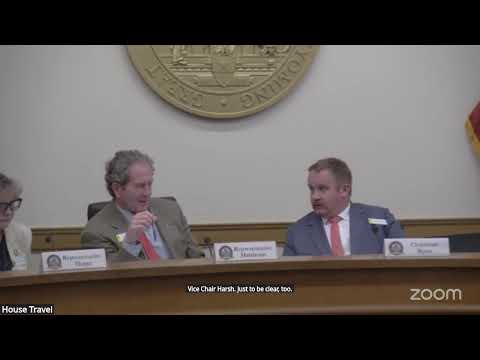
The House Travel, Recreation, Wildlife & Cultural Resources Committee advanced Senate File 91 after agreeing to an amendment that removed a proposed appropriation while preserving language authorizing the state to survey and document rock art and inscriptions on state lands and to strengthen penalties for intentional damage.
Sponsor Kale Case (presenting as "Kale Case") told the committee the bill has two main parts: an increase in misdemeanor fines for damaging petroglyphs and an authorization and program to document and image what exists on state lands. "This is a bill that does two things. It first, it increases the penalty for damaging, rock images on state property...The second part of the bill is an appropriation and a program to document what we have or what is being lost," Case said, urging the committee to preserve the core concept even if the appropriation was removed.
State Parks Deputy Director Sarah Sheen and State Archaeologist Dr. Spencer Pelton testified in support. Pelton told the committee there are about 120 rock‑art sites on state lands and said documentation ‘‘lays a baseline for understanding what these sites look like in a moment in time’’ and helps prioritize protections and prosecution of vandalism. Sheen said the appropriation language included subcontracting authority for specialized 3‑D modeling and other documentation work and emphasized the value of baseline records for enforcement.
Tribal consultation: Case said the committee had meetings in Fort Washakie and that tribal representatives and citizens testified; he described consultation and said the bill focuses on state lands off reservations while acknowledging cultural ties across multiple tribes.
Amendment and funding: Committee chair Byron offered an amendment to delete the appropriation language and narrow some technical terms to allow the department to begin documentation with existing or lower‑cost tools. Representatives debated the amendment and sponsors said the change preserved the bill’s protective intent while avoiding a funding fight at the committee stage.
Formal action: The committee recorded a roll call vote on Senate File 91 as engrossed and amended. The clerk read nine aye votes: Representative Campbell (aye), Representative Connolly (absentee aye), Representative Harshman (aye), Representative Jarvis (aye), Representative Provenza (aye), Representative Store (aye), Representative Thayer (aye), Representative Wharfe (aye) and Chairman Byron (aye). The motion to advance the bill carried.
Next steps: Sponsors said they will continue to work with state parks, the State Archaeologist and tribal stakeholders on program details and potential appropriations in future budget work. Committee members emphasized enforcement, documentation and tribal consultation as priorities as the bill moves forward.