Get Full Government Meeting Transcripts, Videos, & Alerts Forever!
Get email alerts on the Policing Traffic Stops topic
No spam. Unsubscribe anytime.
Residents, Advocacy Group Urge Richmond Council to Ban Predictive Policing and Improve Traffic-stop Data
Summary
Members of the Richmond Transparency and Accountability Project urged the Public Safety Standing Committee to act on racial disparities in traffic stops, calling for a ban on predictive policing, regular data from the Richmond Police Department and collaboration with the Commonwealth ttorney to decriminalize minor offenses.
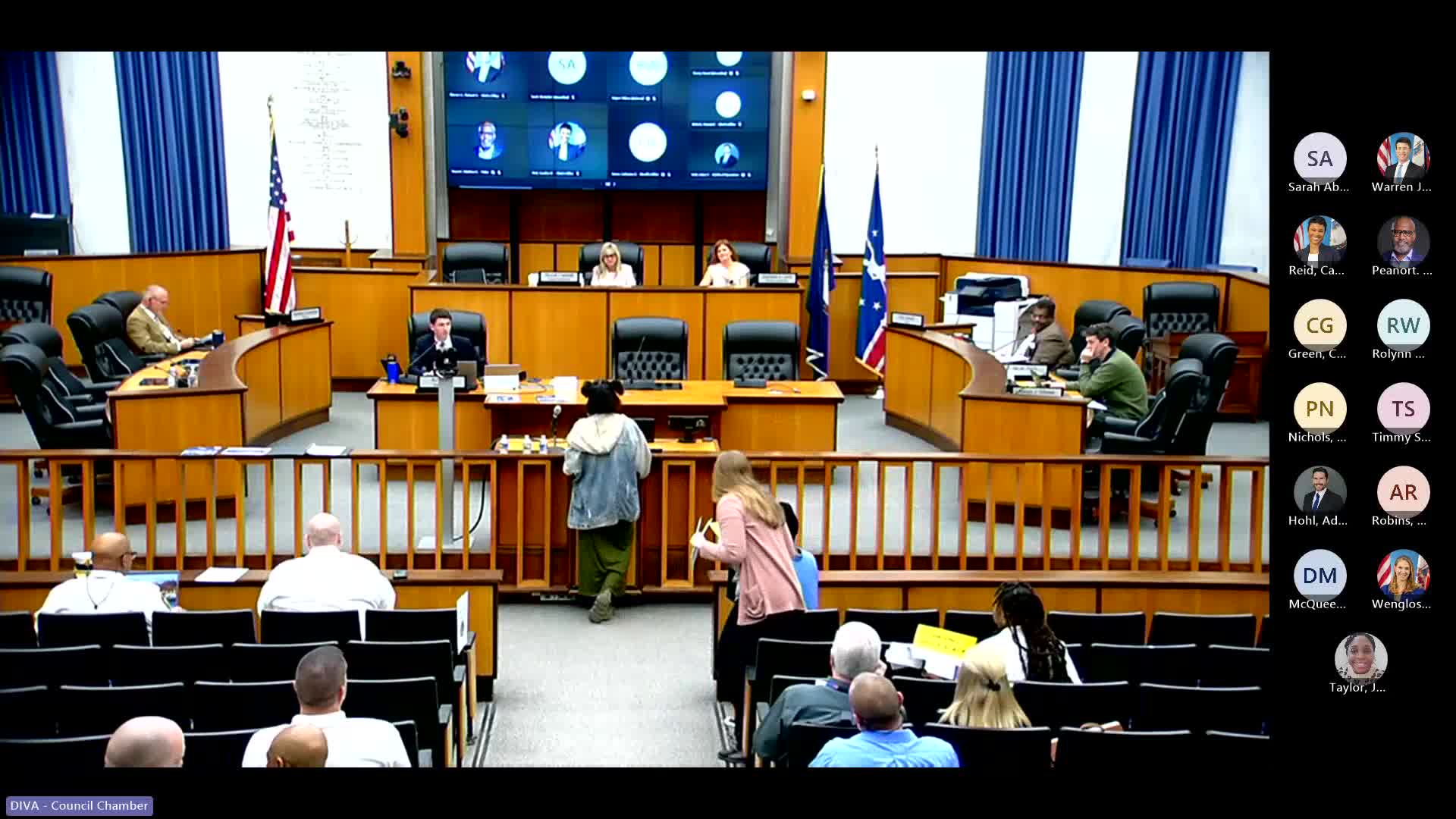
Dream Boyd, a Third District resident and member of the Richmond Transparency and Accountability Project, told the Public Safety Standing Committee that past traffic stops have left her traumatized and asked the committee to take a public stance to reduce racial disparities in enforcement.
"It—s dehumanizing being in their presence," Dream Boyd said, recounting a rainy stop she said involved a search and handcuffing of her and a family member. She asked the committee to "encourage Richmond Police Department to provide more consistent data on traffic stops, collaborate with the office of Commonwealth Attorney to decriminalize certain misdemeanor offenses, and [ban] predictive policing policies."
Lauren McGarry, a Third District resident, attorney and RTAP member, cited dashboard data and the Virginia Community Policing Act to argue Black drivers are stopped, searched and arrested at higher rates than white drivers in Richmond. McGarry said the group—s analysis shows Black drivers are "nearly 4 times more likely to be arrested and searched than white drivers" on the city—s traffic-stop dashboard, and urged the council to act.
Yohamsee Whitaker, a Seventh District resident and RTAP member, told the committee the Richmond Police Department has created 29,000 "microzones" used to focus enforcement. Whitaker said predictive policing shifts decisions to algorithms that feed policing patterns back into themselves and disproportionately affect Black and Brown communities. Whitaker asked city council members to pass an ordinance banning predictive policing, require more consistent RPD traffic-stop data, and encourage collaboration with the Commonwealth—s Attorney to reduce misdemeanor criminalization.
Another RTAP speaker, identified only as Kayla, described being followed for five miles and later stopped without a lawful reason she could identify; she echoed the call for a ban on predictive policing and consistent stop data.
The public commenters requested three specific policy steps: a public council stance on racial disparities; a ban on predictive policing systems; and more consistent traffic-stop reporting by RPD, plus collaboration with the Commonwealth—s Attorney to decriminalize minor offenses tied to racial disparities. Committee members acknowledged the requests but did not take a formal vote on those policy proposals during the meeting.
Committee staff recorded the public-comment submissions and the committee proceeded to other agenda items.