Get Full Government Meeting Transcripts, Videos, & Alerts Forever!
Get email alerts on the State Legislative Session 2025 topic
No spam. Unsubscribe anytime.
Council hears update on 80th Texas legislative session; city staff tracking hundreds of bills
Summary
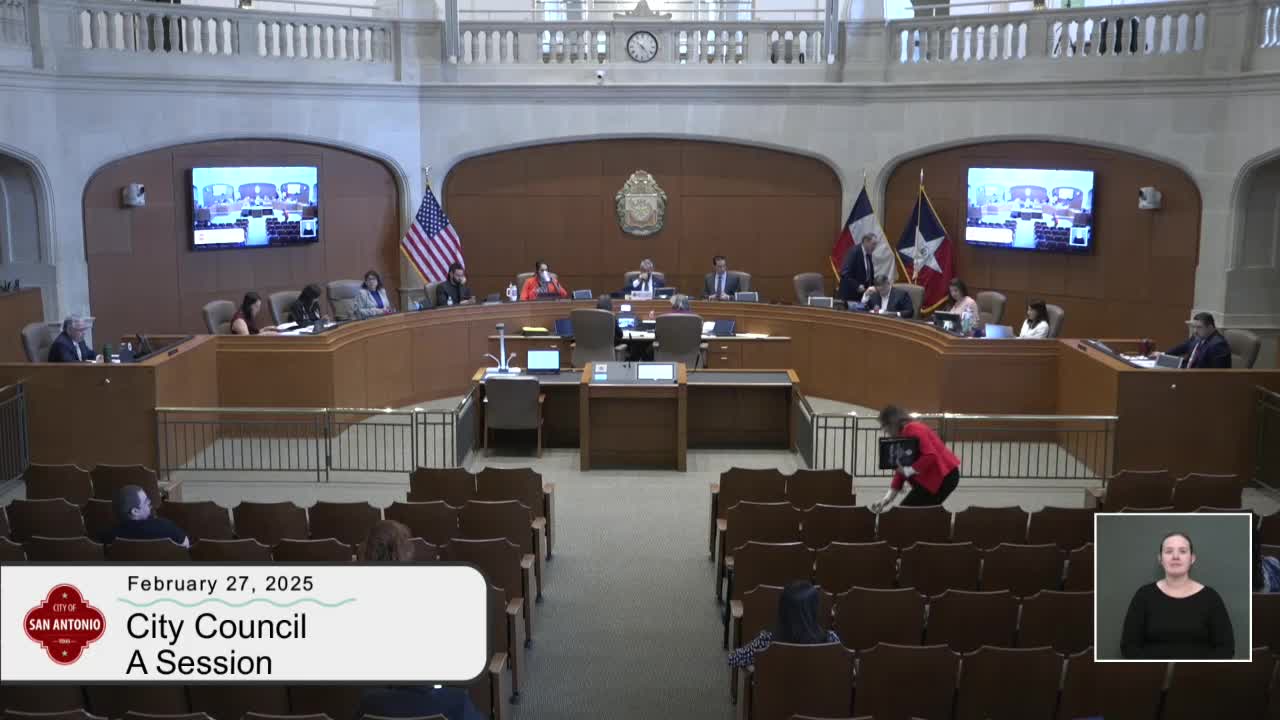
City staff told San Antonio City Council on Feb. 27 that they are tracking about 700 bills during the 80th Texas Legislature and highlighted several measures that could affect local government authority, procurement, animal control and public information obligations.
Sally Basurka, the cityDirector for Government Affairs, briefed San Antonio City Council on Feb. 27 about the 80th Texas Legislature, summarizing priority bills and potential impacts to city programs.
Key facts from the briefing: the state has filed more than 4,500 bills to date, and the citygovernment affairs office is tracking roughly 700. Committee assignments were announced, and several San Antonio-area delegation members hold influential committee posts relevant to city priorities.
Bills and themes the city is tracking (as summarized by city staff during the briefing): - SB 19: A draft bill limiting use of public funds for lobbying by political subdivisions and allowing private suits in some circumstances. City staff said this bill, as filed, would not affect internal government-affairs staff but could curb local governmentsability to hire outside lobbyists and join certain nonprofit lobbying efforts. - SB 4 / SJR 2: A Senate priority to raise the school homestead exemption (reported to trigger a constitutional amendment election); SB 4 would affect school tax exemptions and not city property tax directly, per city staff clarification. - HB 2806 (Rep. Luhan): Increase criminal penalties and tools for local authorities dealing with dangerous dogs; and HB 2325 (Rep. Campos): creating a statewide registry for dangerous dogs with vaccination and owner data requirements. - HB 2156 and HB 2844: Proposals that would limit local authority over mobile food vendors and change permitting rules for food trucks; city staff said the bills aim to standardize rules statewide and could constrain local regulations. - HB 2625: Limits local authority to regulate certain late-night deliveries to food service establishments. - HB 2248 and related bills: Changes to the Texas Public Information Act that would speed response requirements and limit fees; staff noted potential operational impacts for the city, particularly for large or complex requests. - SB 1130: Adds alternative dispute resolution options for public records disputes. - HB 2101: Study of unreported gunshots detected by gunshot detection technology. - HB 1998 / SB 1173: Raise the competitive procurement threshold from $50,000 to $100,000. - HB 806: Prohibits government entities from providing logistical support to abortion assistance entities. - HB 2673: Repeal of some provisions authorizing certain cemeteries near some municipalities.
Council discussion emphasized several priorities: protecting local programs from preemptive state laws (Councilmember Pelaez raised concerns about bills targeting diversity, equity and inclusion programs), ensuring adequate funding and authority for local services, and tracking public-safety and transportation bills relevant to San Antonio.
Councilmembers asked staff to continue close monitoring of bills related to property taxes, procurement thresholds, public information response requirements, mobile food vendors, child welfare, dangerous-dog statutes, and other measures that intersect with city operations. Staff said it will continue to brief council via the Intergovernmental Relations (IGR) committee and provide alerts when bills move to critical stages.
Ending note: City staff asked councilmembers to coordinate with the government affairs team about delegation contacts and local priorities so the city can present coordinated positions to the legislature.