Get Full Government Meeting Transcripts, Videos, & Alerts Forever!
Get email alerts on the Downtown Arena Project Marvel topic
No spam. Unsubscribe anytime.
City council approves MOU to begin talks on downtown arena; East Side councilmember to be included in substantive meetings
Summary
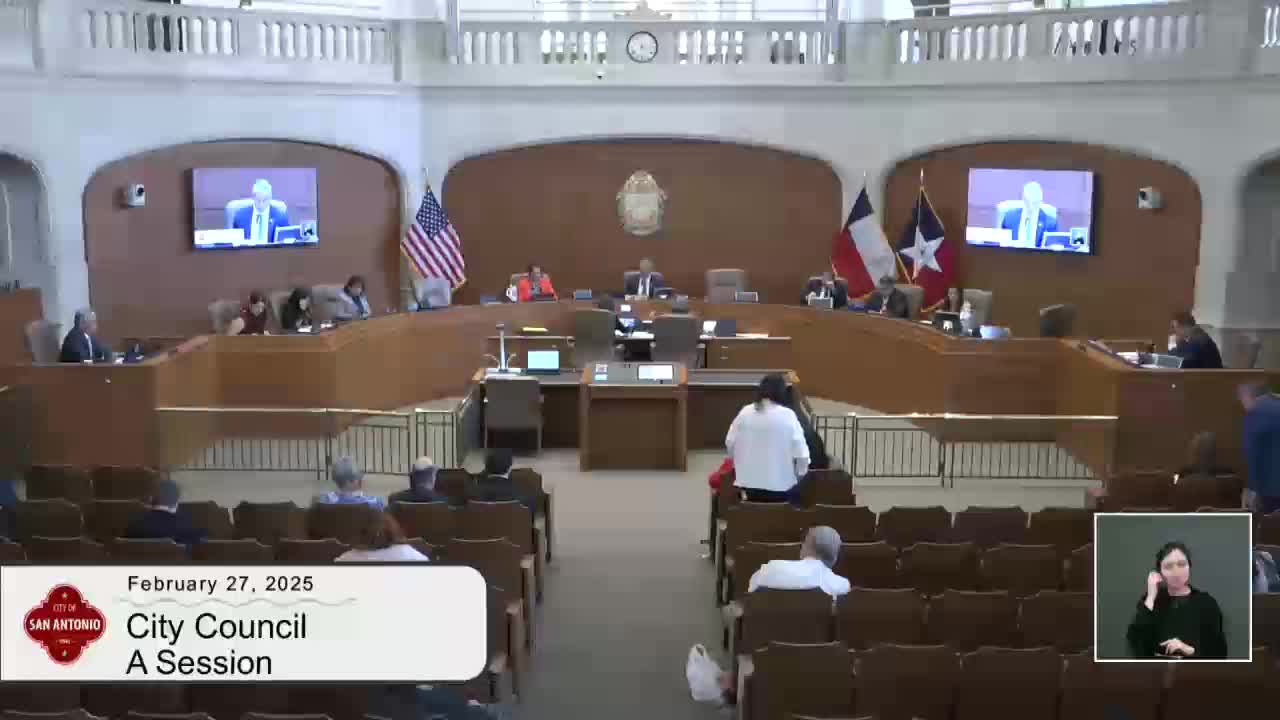
San Antonio City Council on Feb. 27 authorized the city manager to negotiate and execute a nonbinding memorandum of understanding (MOU) with Bexar County and the San Antonio Spurs to study a potential downtown sports and entertainment district and a new NBA arena.
San Antonio City Council on Feb. 27 authorized the city manager to negotiate and execute a nonbinding memorandum of understanding (MOU) with Bexar County and the San Antonio Spurs to study a potential downtown sports and entertainment district and a new NBA arena.
The MOU, as described in council materials, would cover renovation of the Frost Bank Center and Freeman Coliseum, redevelopment of the Freeman Coliseum grounds and surrounding area, and coordination among the city, county and the Spurs on funding and implementation strategies.
Why it matters: The agreement begins a process that could lead to a publicly financed election on the project later this year and, if approved, major redevelopment in and around downtown San Antonio. Council and community speakers pressed for transparency, transportation planning, and assurances that neighborhoods—particularly the East Side—would not be left behind. The council approved an amendment directing that substantive discussions with the Spurs and county must include the councilmembers representing the most directly affected districts.
The council heard a dozen public comments. Supporters from local business organizations urged the council to let formal negotiations begin so the city and region can evaluate details. Jeff Webster, President and CEO of the Greater San Antonio Chamber, called the MOU “nonbinding” and said it “gets us started in talking about the conversation, how we move forward with the Spurs and Project Marvel.” Luis Rodriguez of the San Antonio Hispanic Chamber also urged moving forward so business and small-business opportunities can be explored.
Opponents at the podium urged caution. Philip Adcock said the city should not spend public money on large arenas and warned such projects often deliver benefits mainly to wealthy interests. Megan Navarro read a statement from a District 5 resident who said the city should prioritize the housing crisis and affordable housing before entertainment development.
Council debate focused on process and representation. Councilmember Mckee Rodriguez, whose district includes the Willow Springs Golf Course site that county leaders have identified as a possible facilitating parcel, said he had “two very fundamental problems” and demanded substantive protections and direct inclusion for his constituents before any conveyance of public land moved forward. Eric Walsh, the city manager, said he heard multiple concerns at previous briefings and listed six issues he would carry into negotiations, including that any plan for Willow Springs should not be a unilateral “starter” without substantial community input.
Councilmember Cabello Haberdam moved and councilmembers later agreed to an amendment requiring that substantive meetings with the Spurs or the county include the councilmembers for the directly impacted council districts (the motion was expanded in a friendly amendment to explicitly reference both District 1 and District 2). Several councilmembers also said they expect any negotiated MOU to include clear statements about funding sources, that no new taxes be imposed on city residents, and that infrastructure projects connected to Project Marvel should not divert funding from neighborhood projects.
Councilmember Rey S. Pelaez described the MOU language that asks parties to "encourage, promote, attract, and stimulate the development, growth, and expansion of business, commerce, and tourism," and urged the council to keep the surrounding neighborhoods and long-term benefits in focus rather than only the shiny parts of a stadium proposal.
A separate motion to strip the city manager’s authority to execute the MOU failed. After further discussion, the council voted to approve the MOU authorization as amended; the transcript records the result as “Motion carries.” The backup materials list an expiration date for the MOU of Dec. 31, 2025, and describe the agreement as informal and nonbinding.
What comes next: Negotiations will proceed among the city manager’s office, Bexar County and the Spurs. The MOU calls for community outreach and identification of community benefits, and councilmembers said they expect ongoing, detailed public reporting. The council and county would need to return to voters if public funding is required for an election-authorized project.
Public comments and council discussion on the MOU spanned concerns about neighborhood impacts, parking and transportation plans, economic opportunities for local businesses, and the need for clarity on funding sources. Councilmembers repeatedly emphasized that citizens must have full information before any future ballot measure.
Ending note: Council members who supported the motion characterized it as a first step in a long, complex process; opponents urged the council to prioritize housing and neighborhood protections should negotiations advance.