Get Full Government Meeting Transcripts, Videos, & Alerts Forever!
Get email alerts on the Land Use topic
No spam. Unsubscribe anytime.
East-side residents urge city to remove industrial zoning from residential blocks, cite health and displacement concerns
Summary
Dozens of residents and community organizers told the council that industrial rezoning near the Frost Bank Center and Freeman Coliseum threatens residents’ health and long-term neighborhood stability, urging the city to rescind industrial zoning in affected residential areas and to include neighbors in planning.
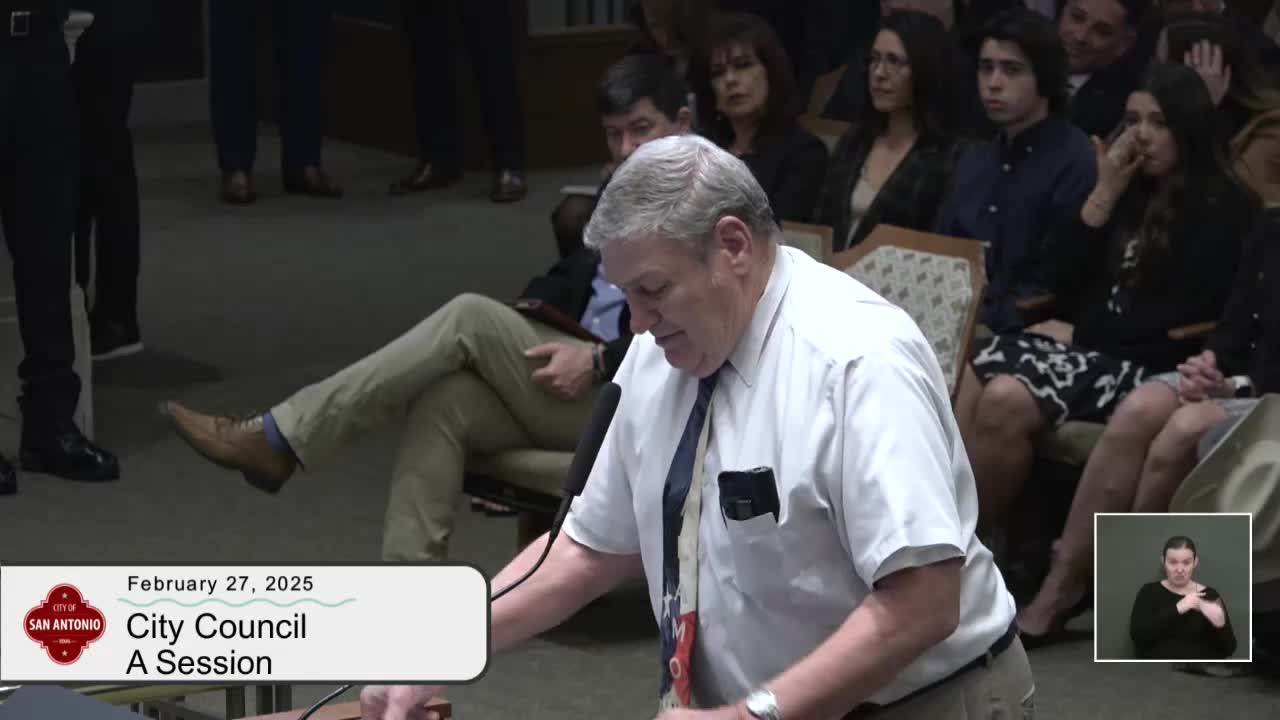
Residents from East and East‑side neighborhoods told the City Council during public comment on Feb. 27 that proposed or existing industrial zoning near the Frost Bank Center, Freeman Coliseum and surrounding blocks is harming long-term residents and must be reversed or limited.
Speakers described long-term industrial encroachment, air pollution, truck traffic and worries that rezonings will lead to displacement of longtime residents. Several said the City has repeatedly allowed industrial uses next to homes and that the change in permitted uses has worsened noise, traffic and local air quality.
Jack Finger, who spoke during public comment on rezoning items, asked: “¿Qué van a hacer con todas esas personas? ¿Las van a aventar de ahí?” Clip Cedeño, a neighborhood association member, described heavy industrial activity and said the area faces “lugares grandes . . . que causan cáncer por el medio ambiente tóxico.” Jacklyn Alí and Verónica Sansei said they have lived in the neighborhood for decades and described a history that shifted from farmland to industrial uses, with resulting health and quality-of-life impacts.
Several commenters asked the council to remove industrial zoning from residential parcels and to require buffers between industrial sites and homes. Speakers also urged the council to include residents directly in any rezoning decisions affecting their blocks.
Council members acknowledged the concerns during remarks and several council members—citing earlier work on equity and community investment—said the rezoning proposals require careful public engagement. Councilmember Villagrán referenced recent council actions and funding aimed at equity and neighborhood investment and urged staff to ensure community voices are part of planning.
Status and next steps The remarks were delivered as part of public comment tied to agenda items that include zoning and redevelopment matters. At the meeting, several related agenda items were placed on the consent calendar and some were pulled for separate consideration. Councilmembers asked city staff to ensure community engagement if the rezonings proceed; no final council action on a specific rezoning ordinance was taken during the public-comment portion recorded in the transcript.
Community groups and individual residents requested that city planners (a) remove industrial zoning where it overlaps residential lots, (b) create protective buffers, and (c) prioritize public‑health analyses before approvals.
What the city record shows The transcript ties these public comments to agenda references including item 22 (rezoning-related) and earlier discussion of related land-use matters. Specific staff reports, proposed ordinance language and vote tallies for rezoning items were not included in the spoken record provided.
Documentation The council did not vote on a new rezoning ordinance during public comment; if staff later recommends zoning changes, the council will consider staff reports, Planning Commission recommendations and public testimony in future agenda items.