Get Full Government Meeting Transcripts, Videos, & Alerts Forever!
Get email alerts on the Law Enforcement Ranks topic
No spam. Unsubscribe anytime.
Commissioners decline to create uniform detective rank for constables; item fails to advance
Summary
A request to create a detective rank in multiple constable offices and to align promotion standards with Harris County Sheriff's Department civil-service practices did not pass the court after debate about parity, oversight and civil-service rules.
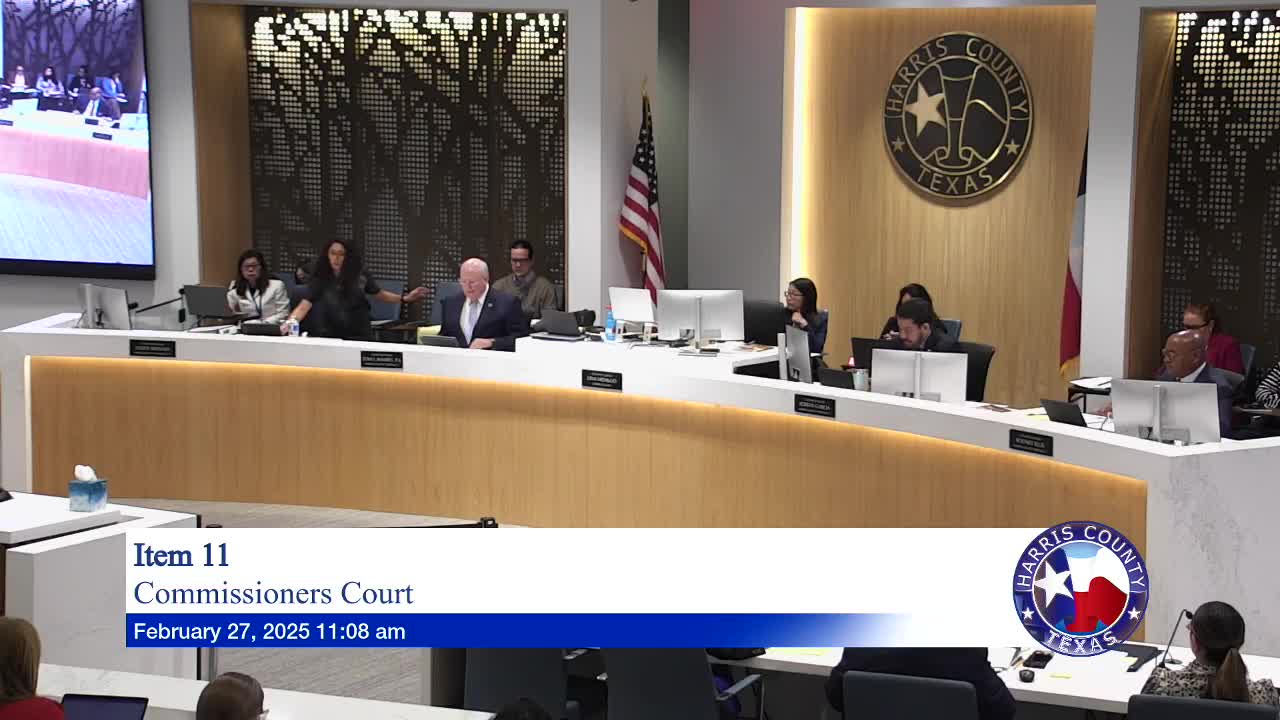
A proposal that would have authorized constables to create a detective rank and to set detective pay scales in several precincts did not advance at the Feb. 27 Commissioners Court meeting after commissioners debated civil-service parity and oversight.
Several constables had asked the court to authorize a detective rank in their pay scales for deputies performing investigative work, especially those assigned to multi‑agency task forces. Proponents said deputies in the constables— offices perform the same functions as sheriff—s detectives and should be eligible for equivalent rank and pay. Several precinct representatives told the court they would be willing to adopt comparable testing and job descriptions.
Opponents raised concerns about parity and the absence of civil‑service oversight for constables— promotions. Commissioner Rodney Ellis said the sheriff must comply with civil‑service exam and promotion rules and that creating detective ranks for offices outside civil service creates inconsistency and limited oversight.
A motion to create the detective ranks was seconded, discussed and then failed in the recorded vote. The clerk recorded two votes in favor, one opposed and two abstentions (per the transcript record); commissioners agreed to revisit the topic with more legal and fiscal analysis and to consider whether legislative changes or other mechanisms could reconcile parity and oversight concerns.
The court did not adopt a uniform requirement in this session; staff were asked to research options and to return with information on the legal pathway (including any needed legislative changes) and budget impact.