Get Full Government Meeting Transcripts, Videos, & Alerts Forever!
Low utilization, local provider concerns cloud CalAIM ECM and community supports; advocates call for higher rates and standardization
Summary
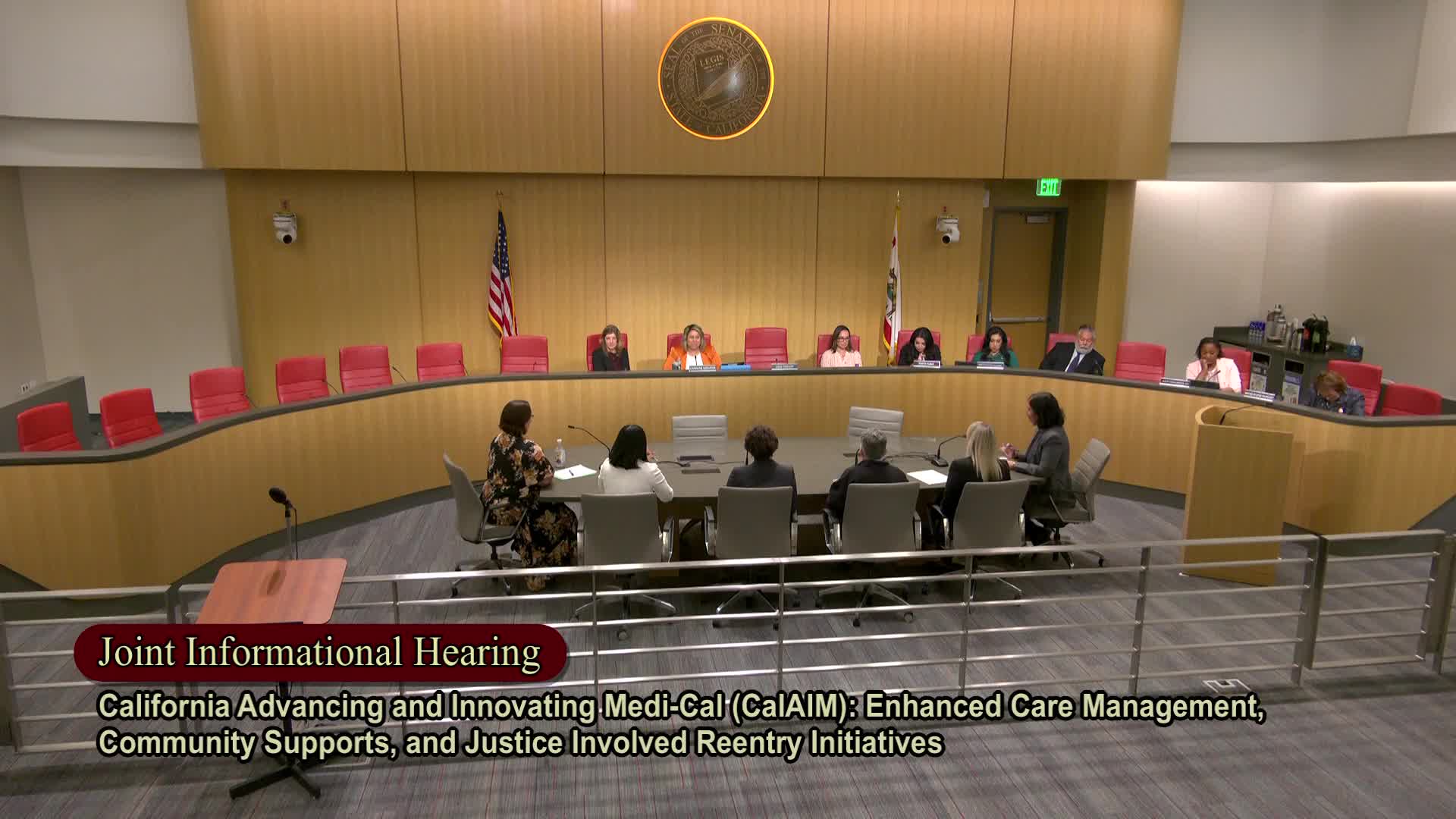
Three years after CalAIM launched enhanced care management (ECM) and optional community supports, presenters at a Senate hearing said utilization remains far below need, community-based providers face billing and contracting barriers, and assisted‑living and housing supports require clearer statewide operations and faster plan access.
Lawmakers and stakeholders told a joint Senate Health and Public Safety hearing that CalAIM’s enhanced care management (ECM) and community supports — services designed to coordinate care and address social drivers of health — remain unevenly accessed three years after initial implementation, and they urged the state to standardize contracting, raise reimbursement and prioritize locally embedded community‑based organizations (CBOs).
The hearing framed ECM as a high‑touch care management benefit for Medi‑Cal members with complex needs and community supports as a set of optional services (14 named services in DHCS guidance) plans can offer to address housing, nutrition and other social needs. Linda Wei of the Western Center on Law & Poverty told senators that, while utilization has increased, "less than 1% of Medi‑Cal members have received ECM or community supports since implementation in 2022," and advocates report quality and access problems including long approval timelines and narrow plan eligibility policies.
Why this matters: ECM and community supports retool Medi‑Cal to fund services aimed at preventing hospitalization and institutional care by addressing housing, nutrition, transportation and other barriers. If implemented broadly and equitably, they could reduce costly acute care. Panelists, however, said administrative and rate barriers prevent community providers from scaling up.
Provider testimony emphasized local…
Already have an account? Log in
Subscribe to keep reading
Unlock the rest of this article — and every article on Citizen Portal.
- Unlimited articles
- AI-powered breakdowns of topics, speakers, decisions, and budgets
- Instant alerts when your location has a new meeting
- Follow topics and more locations
- 1,000 AI Insights / month, plus AI Chat