Get Full Government Meeting Transcripts, Videos, & Alerts Forever!
Senate hearing spotlights CalAIM reentry rollout; counties, providers cite funding, billing and coordination gaps
Summary
Senate committees heard updates March 2025 on the CalAIM Justice-Involved Reentry Initiative, where county health officials, probation leaders, CDCR and community providers described early benefits — medications and appointments in hand at release — but warned that one‑time startup funds, low billing rates and data‑sharing and coordination gaps threaten long‑term sustainability.
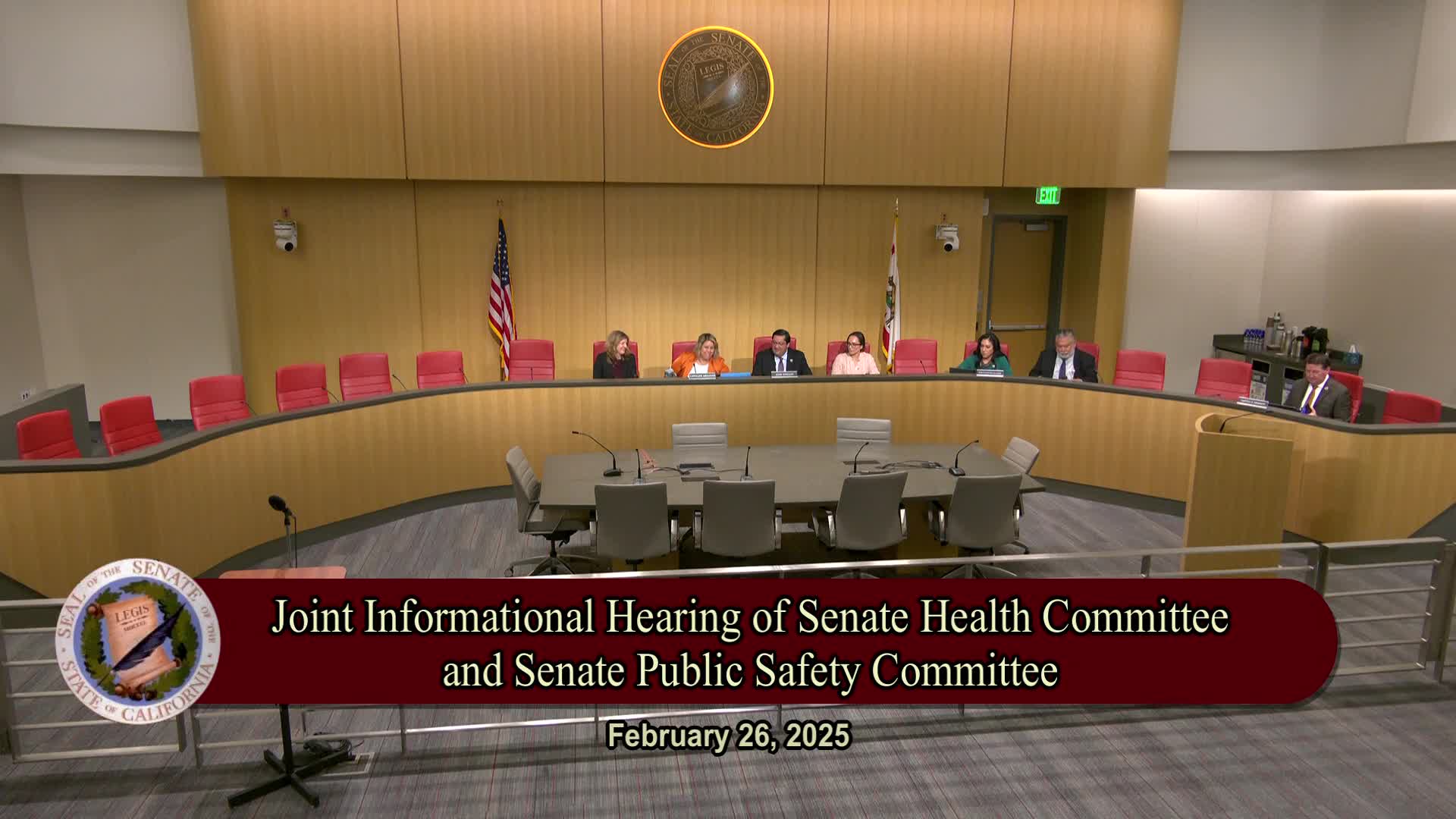
Senate committees on Health and Public Safety heard updates and concerns about the CalAIM Justice-Involved Reentry Initiative at a March hearing, where state and county health officers, corrections officials and community providers described both early implementation successes and outstanding operational challenges.
The hearing opened with Senator Menjivar, chair of the Senate Health Committee, framing CalAIM as a statewide effort begun in 2022 to expand Medi-Cal services that address social drivers of health. Panelists then described how the initiative is intended to provide prerelease and 90-day in‑reach services to incarcerated people so they leave custody with medications, appointments and connections to community supports.
Why this matters: The initiative shifts new federal Medicaid funding to correctional settings and county reentry services and aims to reduce hospital and criminal justice costs by improving continuity of care after release. Panelists emphasized that initial federal and state investments created the infrastructure to bill Medicaid for prerelease care, but they warned the program’s long‑term success depends on reimbursement rates, staffing and better operational coordination.
HealthRight 360 chief executive Vidka Eisen told the committees that the program’s complexity — dozens of managed‑care plans serving beneficiaries who return to 58 counties from more than 30 state prisons and dozens of camps — argues for regional "hub" entities to coordinate warm handoffs, standardize contracting and reduce administrative burden on local providers. "By establishing regional hubs ... you can ensure some kind…
Already have an account? Log in
Subscribe to keep reading
Unlock the rest of this article — and every article on Citizen Portal.
- Unlimited articles
- AI-powered breakdowns of topics, speakers, decisions, and budgets
- Instant alerts when your location has a new meeting
- Follow topics and more locations
- 1,000 AI Insights / month, plus AI Chat