Get Full Government Meeting Transcripts, Videos, & Alerts Forever!
Get email alerts on the Medi Cal Budget Estimates topic
No spam. Unsubscribe anytime.
DHCS projects higher Medi‑Cal costs driven by immigration‑status enrollment, redeterminations and pharmacy spending
Summary
DHCS presented updated Medi‑Cal local assistance estimates showing increases in total funds and general fund needs for the current and budget years, driven by higher enrollment among beneficiaries with pending immigration status, increased pharmacy expenditures and redetermination costs from the public‑health unwinding.
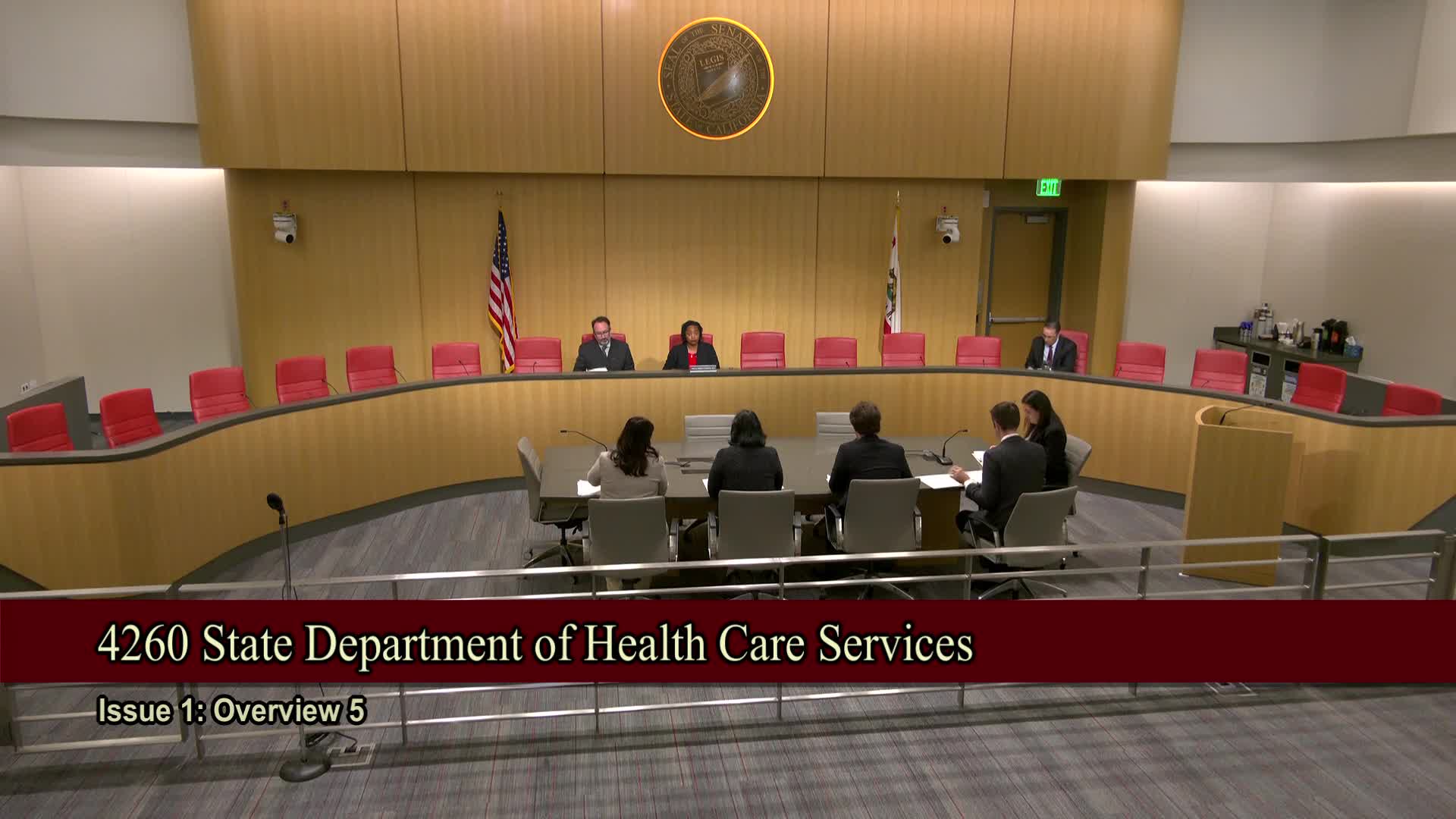
Department of Health Care Services presented the November 2024 Medi‑Cal local assistance estimate to the Senate Budget Subcommittee. For the current year DHCS reported an updated projection of $174.6 billion in total Medi‑Cal spending, including $37.6 billion in state general fund, reflecting an increase of about $13.7 billion in total funds and $2.6 billion in general fund compared with the 2024 Budget Act.
DHCS attributed current‑year increases primarily to higher‑than‑anticipated enrollment for persons with unsatisfactory immigration status (the department stated Medi‑Cal covers just under 15 million members statewide) and to higher pharmacy costs—DHCS identified $540 million in pharmacy increases beyond previously anticipated growth. The department also noted $1.1 billion in increased costs related to redeterminations from the public‑health unwinding and cited a $1.0 billion reduction due to the managed‑care organization (MCO) tax for the current year.
For the budget year the estimate projects $188.1 billion in total Medi‑Cal spending and $42.1 billion in general fund, an increase of about $13.5 billion from the current‑year revised estimate. Drivers for the increase include changed availability of the MCO tax following Prop 35 (estimated $3.6 billion increase), $215 million in increased pharmacy expenditures, and other factors such as enrollment growth and changes in average managed care rates.
Senators asked about the rationale for projected enrollment declines in 2025–26 (the governor’s budget assumes an annual caseload of 14.5 million). DHCS said the budget assumes the sunsetting of certain federal flexibilities tied to the public‑health emergency as of June 30, 2025, which is expected to lead to higher disenrollments during redeterminations.
The Legislative Analyst’s Office and Department of Finance were available for questions and offered no substantive changes to DHCS’s projection at the hearing. Committee members said they would follow up on specific drivers such as pharmacy cost trends and redetermination impacts.