Get Full Government Meeting Transcripts, Videos, & Alerts Forever!
Get email alerts on the Public Health topic
No spam. Unsubscribe anytime.
Austin Proclaims February 2025 American Heart Month; EMS urges bystander CPR to improve cardiac arrest survival
Summary
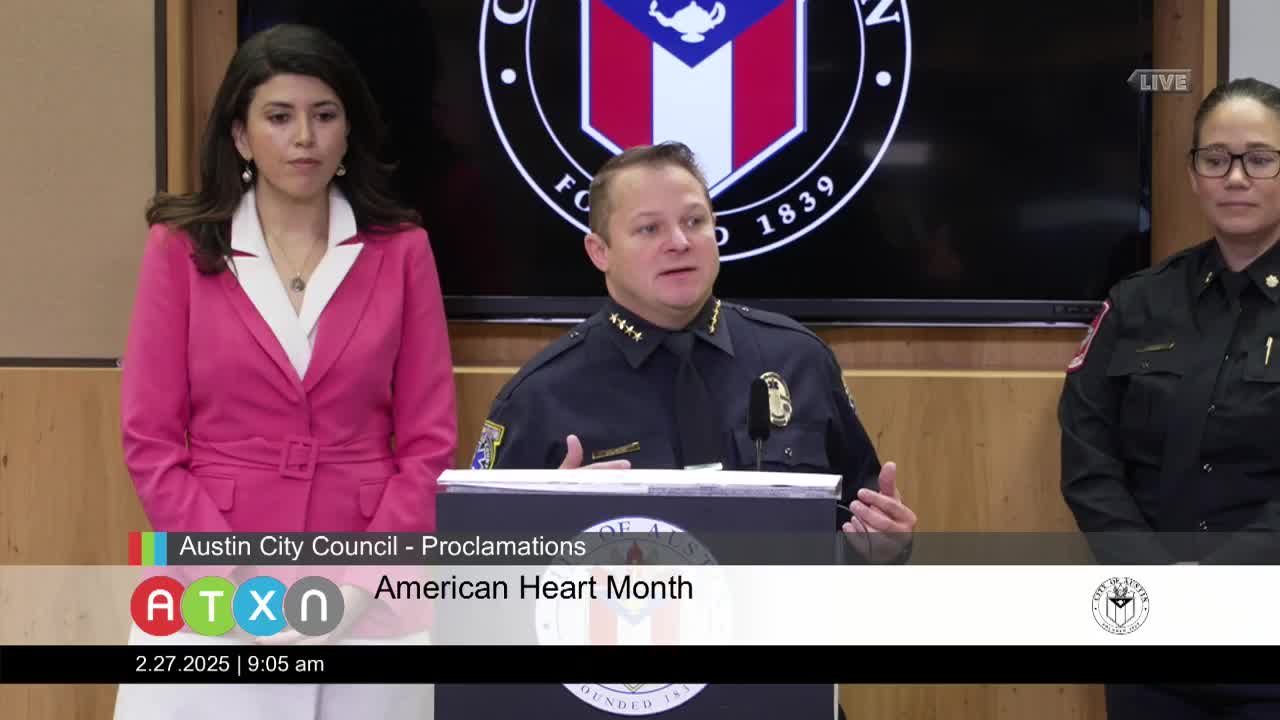
Mayor Pro Tem Vanessa Fuentes presented a proclamation declaring February 2025 American Heart Month; Austin-Travis County EMS emphasized prevention, equity and bystander CPR as key to improving cardiac arrest survival.
Mayor Pro Tem Vanessa Fuentes presented a proclamation declaring February 2025 as American Heart Month for the City of Austin and highlighted racial disparities in cardiovascular outcomes.
Fuentes said American Heart Month is "a crucial time to highlight the importance of heart health and commit to building healthier communities," and noted the personal stakes for her family, including relatives who have had heart defects and surgery.
The proclamation text read that cardiovascular disease is the leading cause of death in the United States and cited national and demographic statistics, including that cardiovascular disease disproportionately affects some groups and that heart disease is the leading killer of women.
Robert Lukritz, chief of Austin-Travis County Emergency Medical Services, accepted the proclamation and said prevention and treatment are core priorities for the agency. "One of the best things that we can do is to go out and learn CPR," Lukritz said, urging residents to take classes and pointing to Austin-Travis County EMS resources at AustinTexas.gov/EMS.
Lukritz said bystander CPR is the single most important action to improve survival for people who experience cardiac arrest, beyond the response capabilities of EMS. He added that the agency is tracking cardiac arrest survival with an equity lens to identify neighborhoods with lower survival rates and to target community interventions.
The proclamation and remarks combined public-health messaging about diet, exercise and tobacco cessation with an emphasis on addressing historical inequities that affect heart health across demographic groups.
City officials did not adopt any new policy or funding through the proclamation; the event served as a public recognition and a call for community action and training.