Get Full Government Meeting Transcripts, Videos, & Alerts Forever!
Get email alerts on the Ccs Mou topic
No spam. Unsubscribe anytime.
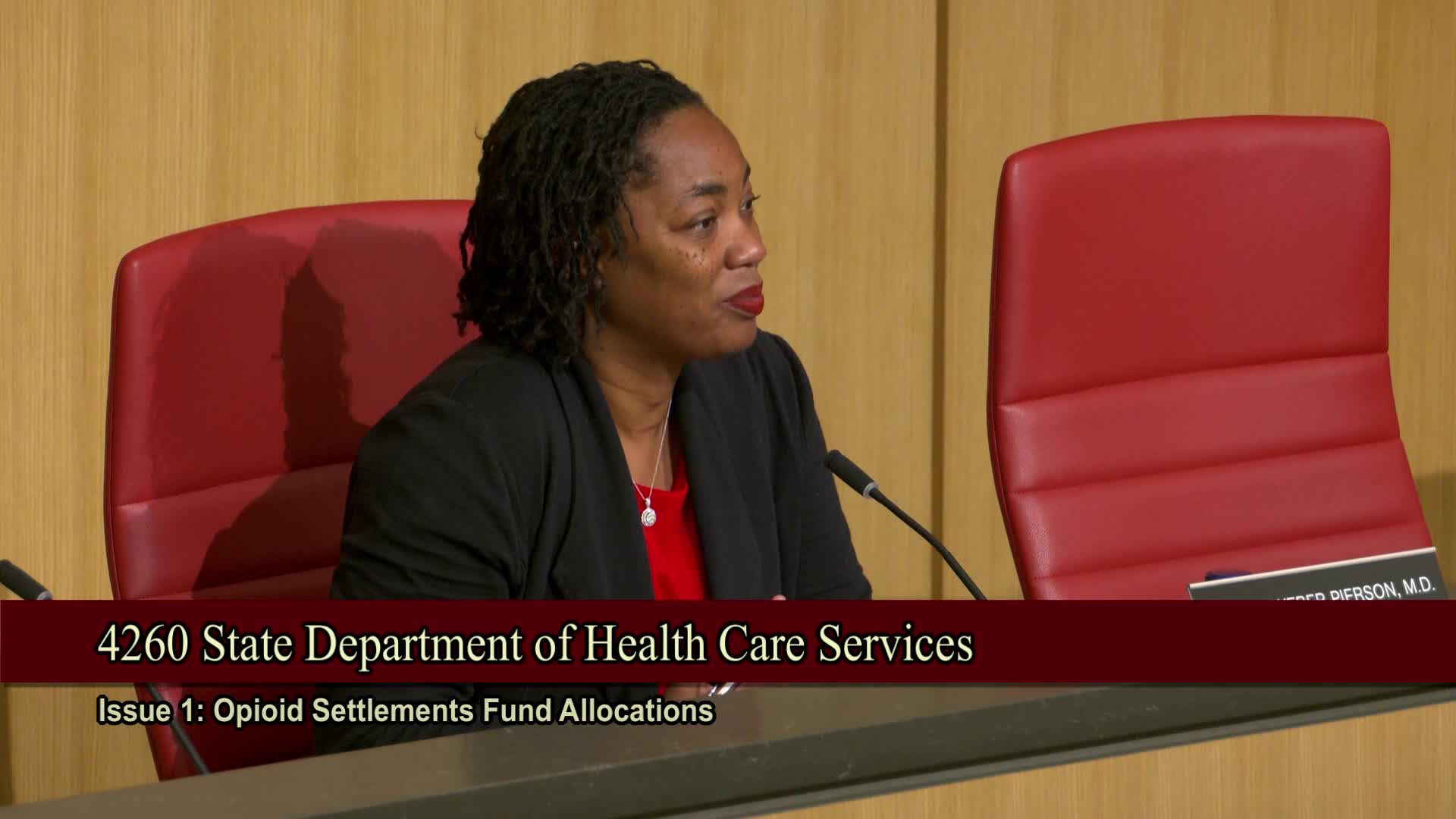
Counties urge delay, say CCS MOU and staffing formula leave programs underfunded
Summary
DHCS told the Senate subcommittee that a finalized CCS monitoring and oversight MOU will be implemented July 1 if counties return signed MOUs by June 30; county officials urged delays until staffing formulas and funding are updated.
Department of Health Care Services told the subcommittee that a county‑state monitoring and oversight (MNO) memorandum of understanding for the California Children’s Services (CCS) program was finalized in June 2024 and that counties are asked to return signed MOUs to DHCS by June 30 for a July 1 implementation date. DHCS said the MOU largely documents county and state roles and responsibilities, and that the department provided about $10 million in 2024–25 to counties for readiness activities tied to the MOU.
Several senators and county representatives told the panel that counties have significant concerns about the MOU’s implementation because county officials say the staffing formula that underlies CCS funding is old and does not reflect current workload. DHCS acknowledged the formula has not been updated recently and said it is engaged with counties to better understand staffing and operational needs.
DHCS reported that five counties had returned signed MOUs as of the hearing. County and public commenters said they are asking for the staffing standards to be “right sized” before the MOU goes live and for the department to tie implementation to sufficient funding. Representatives from the California Health Officers Association and the California State Association of Counties noted counties are preparing grievance processes and will receive technical assistance on reporting templates in spring 2025.
Public comment and county testimony included numerical estimates of underfunding that county associations say reflect the gap between DHCS staffing standards and county needs. A county association representative told the panel that county CCS programs were underfunded by roughly $91 million in 2023–24 and $115 million in 2024–25 based on DHCS standards and current workloads; DHCS said the department is continuing conversations with counties to reconcile workload assumptions and funding levels.
Senators pressed DHCS on whether readiness funding and the MOU language would be sufficient for counties to meet performance obligations. DHCS said most MOU activities documented are already being done locally and that the MOU formalizes roles rather than creating wholly new program responsibilities, though officials acknowledged some outstanding operational issues (for example, space for medical therapy in schools) fall outside DHCS direct authority and require interagency engagement.