Get Full Government Meeting Transcripts, Videos, & Alerts Forever!
Get email alerts on the Judicial Budget topic
No spam. Unsubscribe anytime.
Judicial Council urges restoration after trial-court cuts, warns of staff, technology impacts
Summary
Presenters from the Judicial Council told a Senate budget subcommittee that partial restoration in the governor’s budget will avert layoffs and restore public counter and phone hours, but gaps remain for technology upgrades, recruitment and long‑term funding.
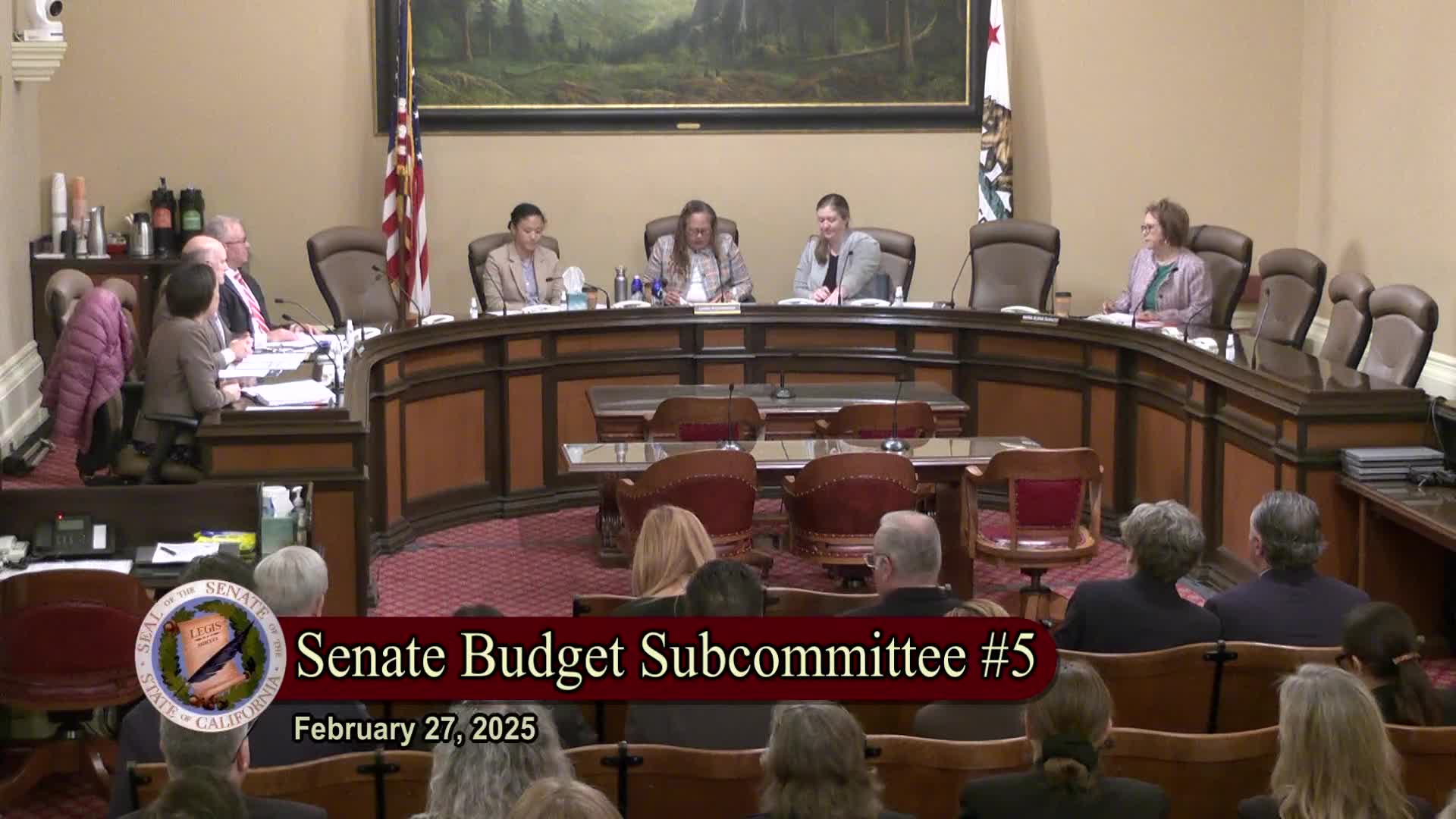
The Judicial Council told the Senate Budget Subcommittee No. 5 on Friday that the governor’s January budget includes partial restorations that have helped courts avoid layoffs and reopen public counter hours but that significant, ongoing shortfalls and rising costs still threaten court operations.
The Council’s administrative director, Michelle Shelley, told the panel the governor’s proposal and Department of Finance actions ‘‘demonstrate committed support of the branch’’ and said the Judicial Council appreciates the $42,000,000 restoration and $40,000,000 for increased operational costs proposed for trial courts. ‘‘Those things . . . allow the courts to continue to do the day‑to‑day operations that they need,’’ Shelley said.
Why it matters: Trial courts handle civil and criminal dockets, custody and family matters, and other time‑sensitive proceedings. Witnesses said cuts already forced courts to plan furloughs and shrink public hours; restoring funds allowed many courts to avoid those measures. The subcommittee’s decisions over the next months will affect staffing, technology upgrades, and access to court services statewide.
Most important facts first: Judge Ann Mormon (identified in testimony as a Mendocino County judge and chair of the Judicial Branch Budget Committee) and county court executive Darrell Parker described specific effects. Parker said hiring freezes and reduced clerk hours were implemented when cuts were expected; with restorations, Santa Barbara Superior Court has extended clerk hours back toward previous levels and lifted hiring freezes. Judge Mormon said restorations prevented furloughs and layoffs and preserved phone and counter access for court users.
Presenters and analysts also outlined remaining shortfalls and fiscal risks. Slatko Theodorovic, Judicial Council budget director, summarized the branch’s $5.2 billion proposed total in the governor’s budget and noted a continuing $55,000,000 reduction assumed if only $42,000,000 of restoration is provided as a one‑time backfill. He also highlighted that many court programs rely on federal funds and that any federal reductions would have significant downstream effects.
Questions from senators focused on measurement and accountability. Senator Wacha asked for statewide vacancy numbers; the Judicial Council said county vacancy counts vary and offered to provide data. LAO analyst Anita Lee recommended that the legislature weigh ongoing general fund commitments ($82,000,000 ongoing beginning in 2025–26, per LAO summary) against other priorities, and suggested legislative guidance on priorities for discretionary trial‑court spending. The Department of Finance said flexibility for courts is intentional because local needs differ, but that it will consider LAO’s recommended bill‑language changes.
Discussion versus decision: Committee members posed questions and received commitments to provide additional data. No formal committee vote or law change occurred at the hearing; the session was an informational budget hearing and part of the budget deliberations leading up to May Revision.
Supporting details and context: Witnesses stressed recruiting and retaining staff as a continuing challenge and pointed to technology needs that support remote hearings and e‑filing. The Judicial Council said courts risk pausing necessary maintenance and upgrades without sustained funding. The council also described a reliance on a mix of fund sources — general fund, trial court trust fund balances, and federal grants — and noted a proposed budget provision authorizing transfers from the trial court trust fund back to the general fund for the current year that LAO advised should include stronger legislative oversight and notification requirements.
Ending: Committee staff asked presenters to submit written follow‑up on statewide vacancy data and caseload complexity studies. Members signaled that the tradeoffs between court funding and other priorities will be central to the subcommittee’s upcoming recommendations.