Get Full Government Meeting Transcripts, Videos, & Alerts Forever!
Get email alerts on the Defender Case Management topic
No spam. Unsubscribe anytime.
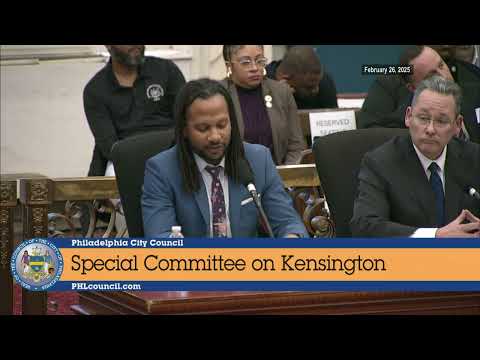
Defenders urge case management, social workers and faster FER placement after Kensington testimony
Summary
The Defender Association told the council committee it represents tens of thousands of clients citywide and urged investment in social workers and case management to improve diversion outcomes; defenders raised delays in the FER evaluation and requested dedicated funding for Kensington-focused services.
The Defender Association of Philadelphia told the special committee on Kensington that delays in post-arrest assessments and a shortage of in-house social work capacity are creating gaps that reduce the effectiveness of diversion programs.
Keisha Hudson, chief defender for the Defender Association, said defenders represented 44,000 adults in 2024 and flagged a shortfall of 29 social workers to meet client needs. "Last year, we represented 44,000 adults," Hudson said. "With that 44,000 client population, we only have 29 social workers." She told the committee the defender office had previously requested $2.5 million for 25 social workers and is now asking for an initial, place-based investment focused on Kensington: a $1 million request that would fund five social workers plus targeted case-management capacity in the neighborhood.
Hudson described the FER (forensic intensive recovery) pathway as a missed opportunity when evaluations and bed placements are slow. "It takes over 2 months on average for people to be released through FER," she said, and added that about "18 percent of people who were referred and released before evaluation came back through the system and were rearrested." She recommended clearer, faster communication among prison staff, counsel, the courts and community providers so people are not released in the middle of the night without placement or follow-up.
Andrew Pappas, managing director of pretrial at the Defender Association, described how Neighborhood Wellness Court currently operates one morning a week; he said triage nurses from Penn Medicine's addiction medicine teams screen participants and that higher-volume operations will require more staff and an expanded schedule. Pappas said the defender office provides intensive case management for high-needs clients but noted limited capacity means only a subset of clients currently receive wraparound services.
Caleb Arnold, chief of adult diversion for the district attorney's office, testified about program outcomes and said drug-court graduation rates and AMP completion numbers show strong outcomes for those who finish treatment. He reported 641 AMP completions last year with a low number of subsequent arrests among that cohort and said drug-treatment court showed a 77 percent graduation rate with a 7 percent recidivism rate in one program described.
The defenders urged the council to fund place-based defender supports and better funding for reentry and housing, arguing case-manager-led follow-up is essential to measure and sustain diversion outcomes. No formal votes were taken; the committee asked the administration and the defenders to return with more precise cost and staffing plans.
Ending note: Defenders asked for clearer interagency data sharing and greater investment in in-court and place-based case management to make diversion programs more effective and to protect neighborhood residents during and after the pilot.