Get Full Government Meeting Transcripts, Videos, & Alerts Forever!
Get email alerts on the Forensics Collaboration topic
No spam. Unsubscribe anytime.
Saline County law enforcement, state crime lab praise coroner—s role in death investigations
Summary
Saline County Sheriff—s Office and the Arkansas State Crime Laboratory described strengthened collaboration with the Saline County Coroner—s Office, citing joint training, shared scene duties and record-gathering that they say helps provide answers for families.
Saline County law enforcement officials and the Arkansas State Crime Laboratory on Monday described an expanded working relationship with the Saline County Coroner—s Office that they said improves investigations and helps deliver answers to families of deceased people.
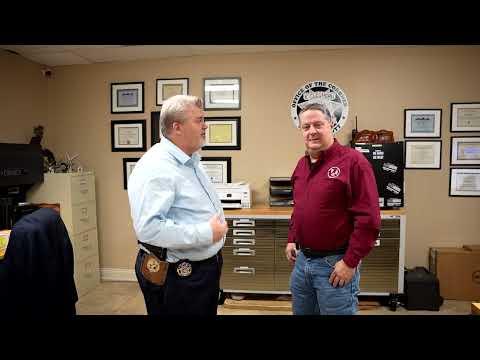
"I'm currently the CID lieutenant with Saline County Sheriff's Office. I've been doing that for about 3 years now. I've worked with the Sheriff's Office as a whole since 2019. And in that time, I've worked with the coroner's office a lot," said Kate Hawthorne, CID lieutenant at the Saline County Sheriff's Office, describing years of collaboration between the sheriff—s investigators and the coroner—s staff.
The partnership now includes co-taught training for outside agencies, coordinated responses to scenes and a division of responsibilities intended to speed up investigations. "We work scenes together as a whole where the coroner's office handles the death portion of it and we handle the actual investigation of the scene," said Sammy Williams, deputy director of the Arkansas State Crime Laboratory. "So that way we can kind of divvy out what we're dealing with ... and make sure that everything is done that needs to be done to give these families the answers that they may need."
Officials said the coroner—s office also assists by collecting law enforcement, fire and hospital records needed for autopsy examinations. Williams added that the coroner—s staff have "knowledge and experience and education, that are beyond a lot of what we see," and described their commitment to investigations. Hawthorne said the coroner—s personnel sometimes speak with families when an officer is not available.
No formal actions or policy changes were proposed or recorded in these remarks. The comments focused on ongoing operational cooperation: shared training, on-scene role division and records support that officials described as reducing investigator workload and helping answer families' questions.
Speakers at the meeting did not provide further details on case counts, budgetary impacts or formal memoranda of understanding between agencies. Funding sources, the number of joint trainings held and any formal oversight or review structures were not specified.