Get Full Government Meeting Transcripts, Videos, & Alerts Forever!
Get email alerts on the Education Policy topic
No spam. Unsubscribe anytime.
Committee advances bill to ban 'institutional discrimination' and restrict DEI programs; public testimony sharply divided
Summary
The Senate Agriculture committee advanced House Bill 147, which would ban certain government DEI programs and define and prohibit what it calls institutional discrimination.
The Senate Agriculture, State & Public Lands & Water Resources Committee voted to advance House Bill 147, a measure seeking to prohibit what its sponsor described as “institutional discrimination” and to limit government diversity, equity and inclusion (DEI) programs.
Representative Rachel Rodriguez Williams, sponsor of HB147, told the committee the bill “takes unnecessary acts to divisive activity by banning discrimination against any Wyomingite on the basis of race, color, ethnicity, religion, biological ***, or national origin.” She said the measure is intended to require a “color‑blind” approach in state government and cited definitions in the bill that would prohibit programs or instruction that classify individuals by race or attribute collective blame or responsibility based on immutable characteristics. “This act restores our state government to the colorblind approach that the Constitution intends,” she said.
The printed draft, as read in committee, creates a new chapter in Title 9 (state statutes) with definitions of diversity, equity and inclusion and a definition of “institutional discrimination.” The listed prohibitions include statements that any race, color, religion or national origin is inherently superior or inferior, or that individuals should be discriminated against or held responsible because of those characteristics. The bill also would bar any government entity from requiring a student, employee or contractor to attend or participate in DEI programs or trainings described as promoting institutional discrimination. The sponsor said there are no penalties in the current draft but that she would consider civil remedies if the Legislature desired.
Public comment revealed sharply divided views. University of Wyoming student Sofia Gomelski urged the committee to vote no, saying the bill “represents an overreach of government authority” and warning it could chill teaching about historical injustices. She testified teaching slavery and its implications is an acknowledgment of historical reality and opposed language that would cause educators to avoid difficult subjects.
Santi Murillo of Wyoming Equality testified in opposition, saying banning DEI “is not about the intent” but that removing DEI programs would “willfully choose to ignore history” and harm students and the workforce. He said DEI work ensures historical truthfulness and helps address inequities.
By contrast, online commenter Laura Pavey supported HB147 and said the bill protects “treat[ment] of people as individuals, not as members of a group,” and protects students and employees from being forced to take part in programs that might conflict with their beliefs. Several committee members and witnesses said the bill does not ban teaching history or cultural celebrations; the sponsor reiterated that the text does not prohibit historical instruction.
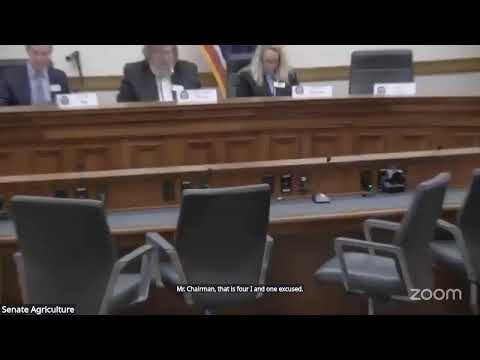
Committee members moved and seconded the bill without recorded floor amendments in committee; the transcript shows a roll call with four ayes and one excused (Senator Crago excused; Senator McEwen recorded an absentee 'aye' on file). The clerk reported, “House Bill 147 has passed the committee.”
With the committee’s approval, HB147 moves forward to the next stage of consideration in the Senate. Committee discussion and public testimony indicate the measure will prompt further debate on academic freedom, classroom instruction and how state government defines and regulates training and programs addressing race, culture and historical injustice.