Get Full Government Meeting Transcripts, Videos, & Alerts Forever!
Get email alerts on the Elementary School Restructuring topic
No spam. Unsubscribe anytime.
Parents, teachers urge Ketchikan school board to reconsider elementary restructuring; community offers alternatives
Summary
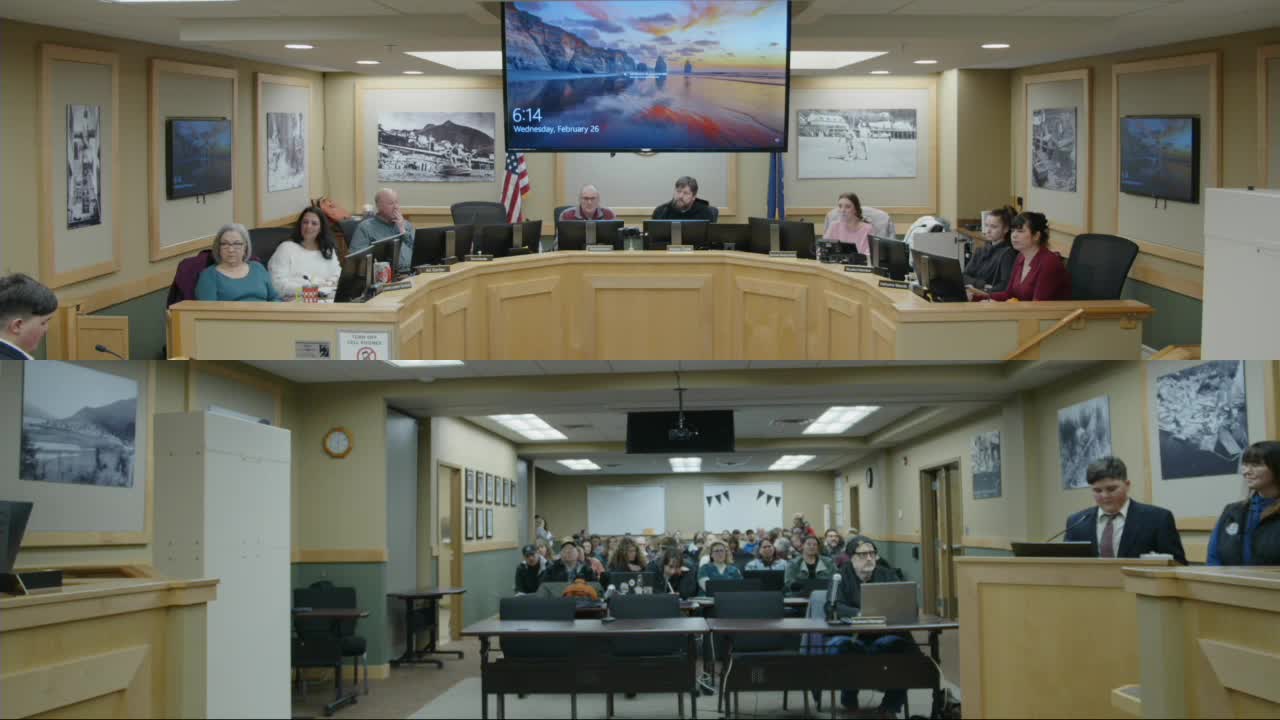
The Ketchikan Gateway Borough School District Board of Education heard more than two hours of public comment Tuesday as parents, teachers and students urged the board to reverse a recent vote to restructure elementary schools and to consider alternate budget cuts developed by the community.
The Ketchikan Gateway Borough School District Board of Education heard more than two hours of public comment Tuesday as parents, teachers and students urged the board to reverse a recent vote to restructure elementary schools and to consider alternate budget cuts developed by the community.
Members of the public said the plan, as presented by district administration, would move roughly "nearly 40% of our district and 700 plus students and families in Ketchikan" to different buildings, separate siblings and lengthen bus rides for many children. Several speakers said the district had not adequately engaged tribes or reached out to families without vehicles.
The community presenters offered three alternative cost-saving proposals that keep neighborhood elementary schools intact: combination classrooms (split-grade rooms) at some grades, relocating district offices out of rented Whitecliff space and eliminating certain vice-principal positions at elementary schools; and a longer-range proposal to move Schoenbar Middle School into Ketchikan High School to preserve CTE (career and technical education) programs while saving building and staffing costs. Presenters said those options could save money without displacing young students across the island.
Why it matters: Parents and educators told the board the proposed specialization would add trauma and instability for young students just recovering from earlier pandemic disruptions, and would strain families who lack private transportation. Multiple speakers cited concerns about special education continuity, loss of teacher teams, expanded bus times and the effect on extracurriculars and mentor relationships.
Public testimony and the community proposal
Students spoke directly. "I want to stay at my school for my last year of elementary school," said Hunter Rogers, a Point Higgins student. He said the proposed move would add about "30 minutes to my drive every day" and that a longer commute meant less sleep.
Teachers and parents described emotional and logistical costs. "We are talking about moving nearly 40% of our district and 700 plus students and families in Ketchikan," said Penny Layton, who described trauma and loss of supports for vulnerable students if siblings and neighborhood placements are separated. Teacher and parent groups submitted a packet and a slide presentation with itemized alternatives and savings calculations; presenters asked the board to place that packet on a future agenda for action.
Tribal consultation and legal concerns
Multiple attendees asked about tribal consultation and federal grant requirements. A parent and board member cited district policy language and federal guidance, referencing Title I/ESSA and a tribal-consultation expectation where federal grants or American Indian student counts apply. Speakers asked the board to confirm whether required consultations had taken place and whether the commissioner of education had reviewed the district—hanges that affect school organization.
Board actions taken during the meeting
Before the public comment period ended, the board voted to add two items to the agenda as reports: the community budget proposal (placed as item 7C) and a memorandum of agreement for the KNEPC board (placed as item 7B). Both votes were recorded as passing unanimously by roll call.
Votes at a glance
- Motion to add the community budget proposal to Reports (placed as item 7C): approved by roll call, 6-0. (No mover/second specified in transcript.) - Motion to add the KNEPC MOA to Reports (placed as item 7B): approved by roll call, 6-0. (No mover/second specified in transcript.) - Motion to approve the agenda as modified: approved by roll call, 6-0.
What the community proposals say
Presenters outlined three principal alternatives: - Proposal 1: Use split/combo classrooms in grades with low enrollment, move central office staff into school buildings (eliminate Whitecliff rental), and remove two elementary vice-principal positions. Presenters estimated savings in the low millions while keeping neighborhood schools intact. - Proposal 2: Move Schoenbar Middle School into the Ketchikan High School footprint, consolidate administrative positions and preserve CTE programs through grade 7—2 articulation. Presenters argued this would maintain elective and CTE access for middle and high school students and create operational savings. - Proposal 3: Combine Proposals 1 and 2 to capture larger savings while avoiding wholesale elementary reassignments.
Presenters warned that the district—udget savings from the reorganization are achieved primarily by cutting staff positions, not by moving buildings, and urged the board to seek cuts that avoid displacing young students. Presenters also suggested other cost reductions: ending an outside legal contract, freezing non-grant administrative travel, and reviewing long-distance special education contracts.
Board and administration responses
Superintendent Robbins (identified in the meeting as the district superintendent) told the board he and staff had already met with teachers and administrators to place staff; he said 93% of teachers received their first placement choice and 100% their first or second choice. Robbins also said the district submitted the required notice of program or school-change requests to the state education commissioner under 4 AAC regulations.
Board members acknowledged the volume of testimony and requested clearer tribal outreach and additional community engagement. Several board members urged a formal process to bring community alternatives back to the board's agenda for study.
Context and background
Board members and many public speakers tied the restructuring to an ongoing multi-year budget shortfall the district faces. Speakers cited the state Basic Student Allocation (BSA) and pending bills at the Alaska Legislature (discussed in the meeting as HB 69 and governor/legislative negotiations) as factors in district planning. Several speakers told the board that short-term fixes must not produce long-term harm to students.
What happens next
The board added the community proposal to "Reports and Information" for a future meeting and placed the KNEPC MOA on the agenda as a report item. The board held several other votes later in the meeting (including budget revisions and a contract award) but did not take final action at the meeting to reverse the restructuring vote that had been taken at a prior meeting. Members of the public repeatedly asked the board to call for reconsideration of that earlier vote.
Ending note
Speakers left packets of proposed alternatives with the district and asked the board to schedule community workshops or a work session to review those proposals and the financial assumptions behind them. Board members said they would consider the community materials and asked administration to return with analyses of the alternatives and clarifications on tribal and federal consultation requirements.