Get Full Government Meeting Transcripts, Videos, & Alerts Forever!
Get email alerts on the Criminal Justice Reform topic
No spam. Unsubscribe anytime.
Committee advances bill to limit long-unserved failure-to-appear warrants after testimony about veteran’s arrest
Summary
Senate Bill 236, offered by Senator Brandon Smith, would add protections for defendants when long-unserved failure-to-appear warrants remain outstanding; the committee advanced the bill 9-0 after extended testimony from a veteran describing being arrested on a 14‑year-old matter.
Senate Bill 236, sponsored by Senator Brandon Smith, cleared the Senate Judiciary Committee by a 9-0 vote after emotional testimony from Melissa Goodman, identified as head of security at Mohawk Energy, about being arrested on a warrant related to an incident more than a decade old.
Smith told the committee he brought the case after learning of Goodman’s circumstances: she had struggled with substance abuse after military service, later stabilized, held steady employment and renewed her driver’s license multiple times, but was arrested on a stop for a seat-belt violation and taken into custody on a $5,000 bond tied to an old warrant. Smith said he found no record that the court or law enforcement had made a prior attempt to notify Goodman of the pending matter.
Goodman said her post-service struggle left her vulnerable but that she had since rebuilt her life and feared the arrest — and its $5,000 cash bond — could derail recovery. ‘‘When you've clawed your way out of this gutter, and it is a gutter, when you've clawed your way out, you don't want to be thrown back,’’ Goodman told the committee, describing depression and PTSD she said were exacerbated by the events.
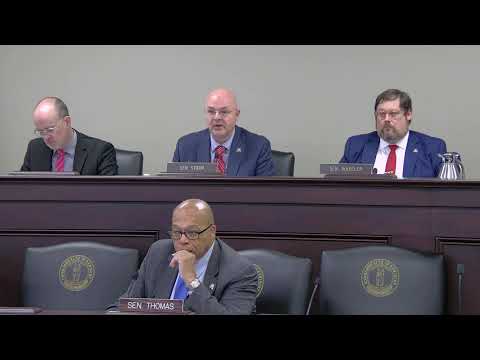
Committee members discussed legal mechanics: Senator Stivers noted that if a failure-to-appear (FTA) is unserved, the proposed bill could make the unserved FTA lapse, but that the underlying charge may still be pending if properly served or otherwise tolled. Senator Thomas cautioned that the bill could create perverse incentives for defendants to go underground for a year to evade prosecution, a concern Smith and others said the bill language attempts to address.
At the roll call the clerk recorded unanimous committee approval and the chair said the bill “passes 9 to 0” and will be reported favorably to the floor.
The bill’s text and any amendments should be consulted for precise statutory mechanics, including whether and when an unserved FTA is extinguished and how underlying charges are treated.