Get Full Government Meeting Transcripts, Videos, & Alerts Forever!
Get email alerts on the Firearms Policy topic
No spam. Unsubscribe anytime.
Senate committee advances bill setting rules for destruction of firearms used in homicides
Summary
The Senate VMAP committee on Wednesday voted to advance Senate Bill 144, sponsored by Sen. Danny Carroll, which would require law-enforcement policies governing destruction of firearms used in homicides and limit how agencies handle firearms sent to the Kentucky State Police for disposition.
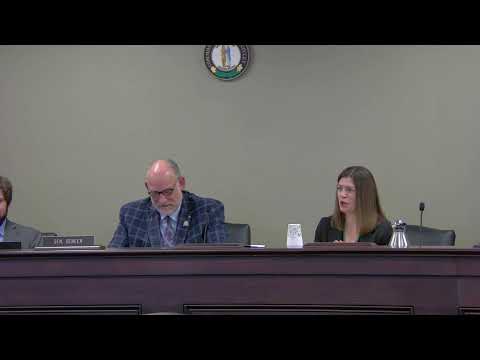
Senate Bill 144, sponsored by Senator Danny Carroll, advanced out of the Senate Veterans, Military Affairs and Public Protection (VMAP) Committee after testimony from Kentucky State Police and brief debate among committee members.
The bill would require law-enforcement agencies across the Commonwealth to adopt written policies for the destruction of firearms used in homicides. It also allows the commissioner or the commissioner's designee to order destruction of weapons that are defaced, contaminated with hazardous substances, unsafe to discharge, or subject to return to an innocent owner who has requested destruction. The measure directs that firearms sent to the Kentucky State Police (KSP) for disposition not be intentionally damaged, modified, or disabled by the agency having custody; instead, an agency having custody is to destroy the weapon itself upon a court order.
The bill’s sponsor, Senator Danny Carroll, described the measure as focused on “the destruction of firearms used in homicides” and on clarifying which firearms must be destroyed and how agencies should document that destruction. Major Bruce Button of the Kentucky State Police answered committee questions about current practice and revenue from KSP auctions. Major Button told the committee: “I can't tell you how much funds we would lose on homicide weapons because we don't track that right now.” He added that, generally, KSP auction activity “brings in about $11,200,000.0 a year,” and that the State Police retains about 20 percent of those receipts while the remainder goes to Kentucky Homeland Security for equipment and vests for other agencies.
Committee members who generally oppose destroying firearms nonetheless supported the bill’s limited scope. Senator Reid asked that the bill be adjusted to protect owners in self-defense cases and asked to add the word “criminal” before “homicide” so that “in any justifiable homicide or self defense situation, the owner of the firearm would have the option of getting their firearm back.” Carroll and Major Button said the bill includes a provision allowing return to an innocent owner who requests destruction, but committee discussion signaled a preference to clarify language.
A motion to report the bill out of committee passed with all recorded votes in the affirmative; committee staff noted no nays were recorded and the bill will move to the full Senate for consideration.
The committee discussion focused on balancing evidence preservation and public-safety concerns with the desire not to unnecessarily destroy firearms that could be returned in some circumstances. The bill also requires agencies to produce written policies related to the destruction of firearms used in homicides, a step supporters said will standardize practice across Kentucky law enforcement agencies.
The committee did not specify a statutory citation in its discussion beyond references to court orders and agency disposition processes; committee members asked staff to clarify language about criminal versus justifiable homicides before floor consideration.