Get Full Government Meeting Transcripts, Videos, & Alerts Forever!
Get email alerts on the Elections topic
No spam. Unsubscribe anytime.
Committee advances bill to verify candidate eligibility before ballots are certified
Summary
House Bill 699 would require election authorities to verify that candidates’ residential addresses are within the jurisdiction sought and that partisan candidates are registered with the party they seek; the committee passed the bill with favorable expression and recorded at least one dissenting vote in explanation.
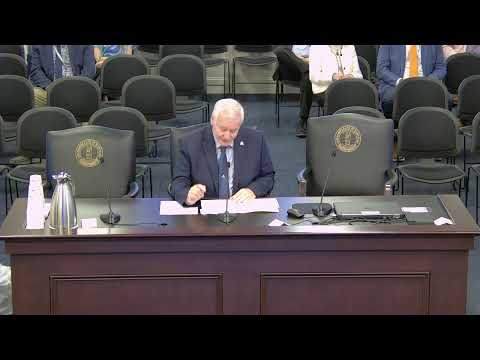
State Representative D.J. Johnson presented House Bill 699 to the House Elections, Constitutional Amendments and Intergovernmental Affairs Committee, saying the measure “introduces a proactive verification process to ensure that candidates meet basic eligibility requirements before their names appear on the ballot.”
Under the bill as described by Johnson, county boards of elections and the State Board of Elections would be required to verify by the first Friday after the filing deadline that a candidate’s listed residential address lies within the jurisdiction of the office sought and, in partisan races, that the candidate is registered with the party for which they seek nomination. If an official determines a candidate is ineligible under those criteria, the candidate would not be certified to appear on the ballot; the bill preserves an appeals path to circuit court.
Johnson said the changes are designed to address recurring errors—such as filings by candidates who live outside the jurisdiction or who list a party affiliation that does not match registration—and to reduce the need for private legal challenges. “Currently, the only mechanism to remove ineligible candidates from the ballot is through a legal challenge in circuit court,” Johnson said, and he said those challenges are often cost-prohibitive.
Representative Hancock explained his recorded vote. After noting the paperwork is “very self explanatory,” Hancock said he would vote no because he did not want to add what he described as an additional administrative burden on election officials. “If somebody can't fill out the paperwork correctly, I think we probably need to question there as a litmus test if they should be running for office,” Hancock said in explaining his no vote.
Representative Hodgson and other members recorded affirmative votes during the roll call. The bill passed the committee with favorable expression.
The transcript does not include details about implementation timelines beyond the verification deadline tied to the filing schedule or indicate whether the committee substitute (if any) included additional enforcement mechanisms or funding for verification activities. The measure, as described in the committee, would alter when and how candidate filings are evaluated and could reduce post-filing litigation in some contests.