Get Full Government Meeting Transcripts, Videos, & Alerts Forever!
Get email alerts on the Elections topic
No spam. Unsubscribe anytime.
Kentucky committee approves bill tightening procedures for precincts, absentee ballots and candidate filings
Summary
The House Elections Committee approved a committee substitute for House Bill 684, which makes multiple changes to precinct staffing, use of school buildings as vote centers, absentee ballot reissuance, video-retention limits and candidate filing requirements; the measure passed the committee with one recorded no vote.
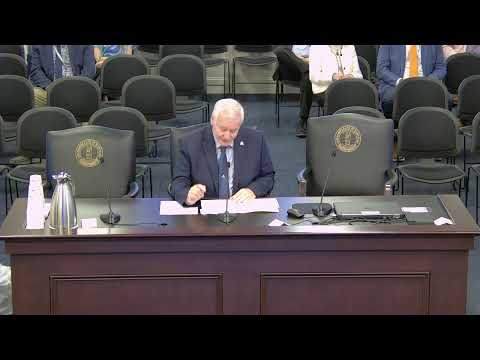
State Representative Jennifer Decker summarized a committee substitute to House Bill 684 on behalf of its sponsors as the House Elections, Constitutional Amendments and Intergovernmental Affairs Committee considered the measure and approved it with favorable expression.
The bill, Decker said, bundles a set of changes developed with the State Board of Elections, the Kentucky County Clerk’s Association and local election officials aimed at “continuous improvement” of election processes. “House bill 684 is the result of that type of collaboration,” Decker said.
The substitute would: allow fewer precinct officers where counties combine precincts into vote centers; require county boards of elections to notify local boards of education and specify the building and dates when a school would be used as a voting center; permit a county board to amend a previously submitted precinct consolidation plan up to 56 days before a special election; allow caregivers who accompany eligible voters to cast an in-person absentee ballot on the same day they accompany the voter; let a county clerk reissue a mail absentee ballot when a voter reports they have not received the first ballot (the previously issued ballot would be canceled); and set uniform, 60-day minimum retention periods for certain video surveillance tied to drop boxes, voting equipment and hand-to-eye audits unless litigation or open-records requirements require longer retention.
Decker also outlined changes to candidate filing and related public disclosures. The substitute would require a candidate’s filing to include a date of birth to help distinguish candidates with identical names, require the candidate’s office and district number (instead of a home address) to be displayed publicly, and limit the online display of political affiliation to partisan candidates. The measure clarifies that two signers on a candidate notification must be of the same party and district at the time of signing, and it changes the write-in candidate filing deadline to match the regular certification deadline while prohibiting posting certified write-in lists in places that could be seen as electioneering.
Jason Denny, Anderson County Clerk and past president of the Kentucky County Clerk’s Association, explained the procedure for replacing an absentee ballot when a voter reports nonreceipt: the original ballot is canceled in the state VRS system and a reissue date is recorded; the replacement can be handed to the voter in person and the first ballot cannot be counted.
Committee members asked several questions about the school-use provision. Representative Lewis asked whether a school district must close the entire district when a building is used as a voting place; Decker said that decision is left to the local district. Representative Roberts asked whether a district that closes a specific school would be required to make up instructional hours; Decker said the bill does not prescribe mechanics for school calendars and those decisions remain with districts.
Representative Candy Massaroni noted that the committee substitute removed debit and credit cards as an acceptable form of voter ID; Massaroni said the change was to avoid placing financial institutions in a position to determine residence and to reduce potential fraud risks.
The committee approved adoption of the committee substitute and later passed the bill by roll call. Representative Hodgson was recorded as voting no; the remaining members present recorded yes votes during the roll call, and the bill “does pass with favorable expression.”
If approved by the full House, the changes described in the committee substitute would alter state election procedures and public displays of candidate information; the transcript does not show further action beyond the committee vote.