Get Full Government Meeting Transcripts, Videos, & Alerts Forever!
Get email alerts on the Utilities topic
No spam. Unsubscribe anytime.
Kentucky committee approves measure to increase oversight of Louisville Metropolitan Sewer District
Summary
The Committee on Natural Resources and Energy approved a committee substitute for House Bill 387, which would add new oversight and spending restrictions for the Louisville Metropolitan Sewer District while removing an earlier provision that would have required legislative approval for some rate increases.
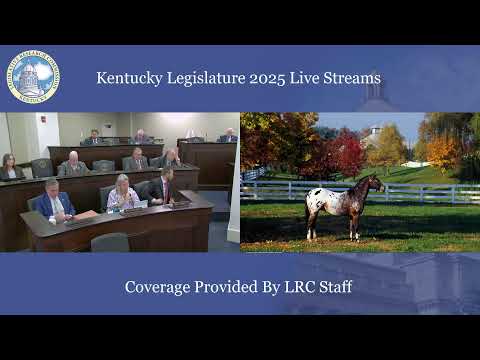
Kentucky House Committee on Natural Resources and Energy on Monday approved a committee substitute for House Bill 387, a measure seeking new oversight and spending restrictions for the Louisville Metropolitan Sewer District (MSD).
Sponsor Representative Bowman told the committee the bill is intended to provide “oversight and accountability for expenditures within the district,” and to respond to concerns from Louisville ratepayers who have seen steep utility increases over time. "One out of every five Kentuckians resides in Louisville, and they need our help today," Bowman said during his presentation to the committee.
Supporters of the substitute emphasized that a provision originally in the bill — requiring MSD to obtain Metro Council approval for rate increases above inflation — was removed after stakeholders warned it could harm bond ratings and existing contracts. "That part of the bill has come out due to some issues with some contracts in those adjoining counties... and the bond rating that MSD needs to continue to operate," the sponsor said.
Tony Parrott, executive director of MSD, described the utility's scope and the factors driving rate changes. "MSD is a public utility that provides services to over 800,000 people in Jefferson County," Parrott said. He said MSD operates three distinct utilities in the county — wastewater, stormwater/drainage, and a flood-protection system — and noted the flood system includes 16 pump stations and about 26 miles of flood wall that protect roughly 200,000 people. Parrott said, referencing recent storms, that MSD "pumped out over 4,600,000,000 gallons" during a major rain event.
Parrott told the committee most capital spending is driven by federal consent decrees and state orders and that those mandates account for the majority of MSD's capital costs. He described customer-assistance programs MSD funds — including an emergency wastewater rate assistance program and a senior discount for qualifying residents — and said the utility spends about $1.9 million annually on those programs, helping roughly 9,000 account holders.
Members pressed MSD on expense categories singled out in the bill, such as advertising, professional memberships and sponsorships, vehicle allowances and other noncapital spending. Parrott said advertising and outreach can be required by law or by court-ordered consent decrees, and that certain outreach (for example, educating customers about fats, oils and grease that harm sewer operations) is part of MSD's public-education obligations. He told the committee the categories cited in the bill amounted to roughly $500,000 in fiscal 2024.
The sponsor and several Louisville-area members said the bill was prompted, in part, by constituent frustration over rising bills and by an internal pay action they described as politically sensitive. "The catalyst to this bill... they gave their top guy 16% raise while looking my folks in the eye saying we're gonna raise it maximum," one member said during debate.
Committee members from Oldham and Bullitt counties said they supported provisions meant to respect existing interlocal contracts and to ensure residents outside Jefferson County have representation on MSD-related decisions. Parrott noted MSD also provides wastewater service in small portions of those counties under arrangements enabled by prior legislation.
The committee substitute passed on a roll call. The clerk recorded multiple affirmative votes and three "pass" responses during the roll call; no "no" votes were recorded in the committee's roll-call exchange. The sponsor said the removed rate-approval provision may be revisited in future sessions.
MSD and the sponsor asked lawmakers to consider the technical complexity of the utility's three operating functions and the consent-decree-driven capital program when weighing further restrictions. Parrott urged the committee to preserve MSD's ability to recruit and retain technical staff needed to operate the system 24/7.
Looking ahead, the sponsor said the legislature may bring back rate-approval concepts for further study but that the immediate committee substitute focuses on accountability for certain expenditures and representation. The committee approved the substitute and recommended the bill for further consideration by the full House.